
By Sofia McGinnis
The rise of artificial intelligence (AI) in the art industry has been a hot topic recently. Last year, the writers’ strike highlighted the growing threat of AI to the industry. This year, animators and video game actors are taking a stand against the threat posed by generative AI.
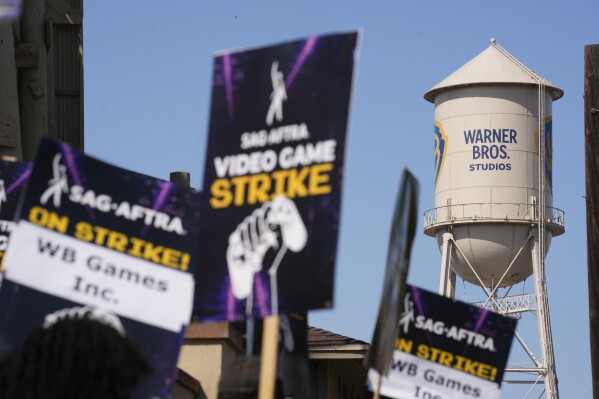
“Video game performers are seeking a new agreement,” said the Los Angeles Times, “that will require video game producers to obtain their consent and compensate them when using AI to replicate their voices or likenesses.”
While negotiations have been ongoing, no agreement has been reached. Much of the Screen Actors Guild – American Federation of Television and Radio Artists is on strike. This has led to a backlog of video games scheduled for release this year.
While the effects of AI may seem distant, as most of the strikes have been in California, several students at The University of Tampa are concerned about how this will affect future career prospects.
“I’m really frustrated with it,” said Camryn Ivory, a second-year animation major at UT, “It’s really demeaning because it takes artist artwork without asking for permission.”
A lot of students feel that using their art to train generative AI without consent is plagiarism. It is neither the computer’s work nor the user’s own work. Instead, they are copying someone else’s hard work and using it as their own without repercussions.
“One of my professors said we shouldn’t even bother with animation with how AI is going,” said Ivory.
UT students are not the only ones feeling the pressure; the professors are too. With generative AI becoming a more prominent threat to the animation industry, professors and students are at a loss for what to do. Some are starting to surrender to the possible reality of losing their job to a computer.
However, most are staying positive, understanding that innovation in technology cannot be stopped. That does not mean their jobs are gone for good.
“It can be a fantastic tool,” said Dana Corrigan, an animation professor at UT, “for an artist to use to streamline projects.”
AI is designed to help us — and the animation industry — with busy work, handling the small organizational tasks so we can focus on the bigger challenges at hand.
It can also help small indie companies get funding for their big projects. By using artificial intelligence, they can generate pictures of their ideas to attract artists’ interest in helping them develop an actual show. However, despite the benefits, the growth of AI has already presented problems.
There has been a growing trend on the internet of people using generative AI to make funny videos. UT students can find videos featuring famous characters such as SpongeBob singing the “Macarena.” However, there is a real person behind that iconic voice.
Generating voices that sound like actual human beings can give rise to deepfakes. Scammers can use AI to mimic real people and take advantage of others.
“People will laugh until it happens to them,” said Sydney Osmon, a fourth-year musical theatre major at UT and an upcoming voice actor.
That is why the animation strike is important. AI will continue to grow and pose a problem, not only for animators and video game actors but for the public as well. At the end of the day, it is up to all of us to make a change.
For all the artists out there, do not worry — real human art is irreplaceable.
“Not to necessarily be afraid of it [AI],” said Corringan, “Just like any technology it’s out there and might as well make it for you. Use it as a tool.”