
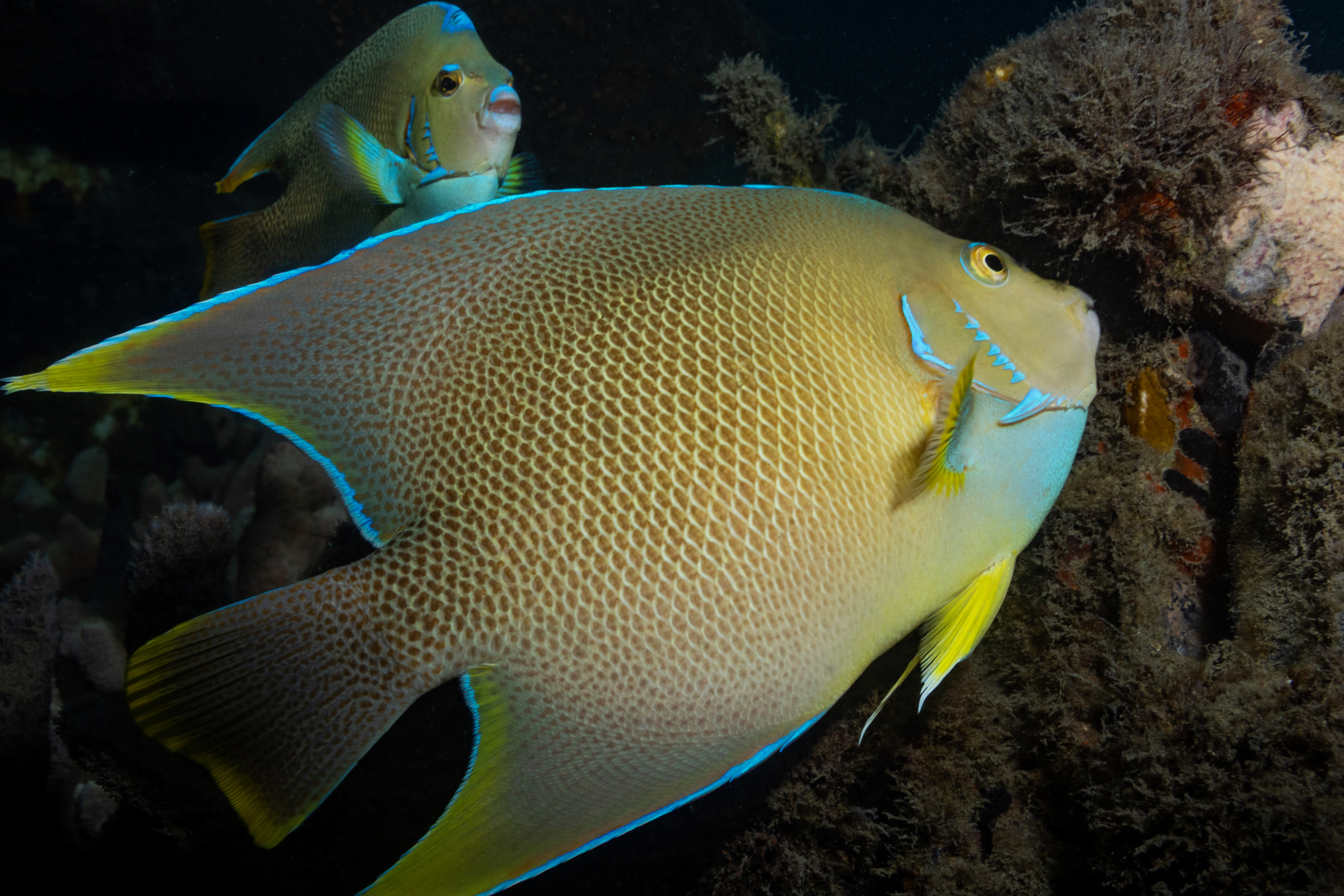
A blue angelfish. Photo courtesy of Miguel Escobar.
By Daniel Mongiello
On January 10, 1776, one of the most influential pieces of American literature was written. Thomas Paine’s “Common Sense” argues for the independence of the American colonies from Great Britain. His pamphlet is regarded as one of the reasons why the founding fathers decided to make the tough decision to secede from Great Britain.
As per the writing of this article, on March 16, 2026, I am a college student currently working to achieve a degree in the field of Marine Biology. From about the age of eight, I have been lucky enough to be around the ocean; my family had a house on the Chesapeake Bay, and the Jersey Shore was never very far from where I lived.
If you have talked to me, my friends, my family, or, honestly, anyone who knows me, you know that I love the ocean with everything in my being. I love the noise you hear when standing on the beach. I love the smell of salt, and even the sunburn I get has become sort of a tradition when I visit the beach.
Even though I do not have the influence or the literary prowess of Thomas Paine, I cannot stand by while the nation I love has a hand in destroying the ocean. Right now, multiple extremely valuable organizations are having their legs cut from under them by funding cuts, with some programs being eliminated.
To start with, there has been a 27% reduction in the National Oceanic and Atmospheric Administration’s budget (NOAA). The National Sea Grant College Program, which has been around for 50 years and funds coastal research at 33 universities, has been terminated.
The Office of Oceanic and Atmospheric Research (OAR) is suffering under a proposed 74% budget cut, causing loss of climate and ocean laboratories. The Marine Mammal Commission is the federal agency dedicated to protecting whales, dolphins, and sea otters. This agency is also being eliminated due to these budget cuts.
The National Ocean Service is having its budget cut in half. This would end funding for extremely important systems such as the Integrated Observing System and the National Estuarine Research Reserve System.
There are many more organizations whose operations are vital to our oceans’ thriving for the next generations that have been forced to close down shop. Here is the official report posted by NOAA that pertains to their budget estimates.
You can check the “Natural Resources” section on House.gov if you want to see for yourself, and I highly suggest you do. The NOAA also publishes its yearly budget estimates on its website.
As a student wanting to research and learn, these budget cuts directly affect me, and so many others, as internships, jobs, and life lines of knowledge are being forcibly closed off. It breaks my heart to see labs close their doors. These labs were once places for eager peers to come together and solve problems, no matter how small or large, all to try and make part of our environment last long enough for generations to come. To allow those in the future to still sit on the beaches and admire our oceans.
This was one of my reasons for adding a journalism major to my future diploma. Like Thomas Paine and so many other writers before me, I want to try, through literature, to reach an audience well beyond my single self. An audience that, like me, cares about what we leave for the people who come after us.
I am terrified for the future precedent we have set for ourselves. It is very clear — from the budget cuts — that our government does not see oceans as a priority, even when they provide so much for us. I am worried about what happens next, and I find myself constantly wondering, where can we go from here?
We can always petition for more funding, but protests fall on deaf ears with politicians who are so caught up in the labyrinth of litigation that they forget the most basic of principles. That they forget to do what is right. Additionally, although they are a good way to get politicians to pay attention, protests can be divisive, and sometimes even lose the original message of what the people are trying to say.
We can vote, using our power of mass to sway public opinion. However, if the supposedly “rock-solid” policy of funding decade-long programs, the same programs that help our oceans, can be rolled back by the wave of a hand, then what does that say about our system? We elect our leaders to represent the will of the people, but once elected, what stops them from changing their minds on what is important?
I do not have the answer to this question. I am a college student who wants to make the oceans and maybe the world a better place. I am no politician, nor am I a professor.
In truth, I am barely a writer. I am, however, asking what happens next, and I implore you to ask this question yourself. If you do not like the answer, write about it, think about it, and talk to your family and friends about it. Have civil conversations about where we are heading on environmental policy, especially in our oceans, and maybe together, we can help fix this growing problem.