
By Steve Ifantis
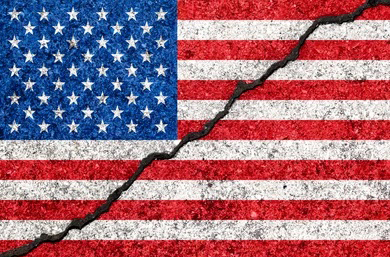
The United States in 2025 is a nation in flux. The country stands at a critical crossroads, facing deep political polarization, economic uncertainty, and global instability. Yet, despite the cracks in its foundation, America’s resilience remains a defining characteristic. The question now is whether we will allow our divisions to define our future or find a path forward through compromise and innovation.
A Fractured Political Landscape
Perhaps the most defining aspect of modern America is the extent to which political division permeates everyday life. The two-party system has become a battleground where compromise is seen as weakness rather than progress. From the halls of Congress to family dinner tables, it is increasingly difficult to have productive discussions without resorting to partisan rhetoric.
The presidential election has only intensified this divide, as candidates leaned into ideological extremes to energize their bases. Meanwhile, faith in government continues to erode. According to Gallup, trust in the federal government is near historic lows, with Americans feeling increasingly disconnected from their leaders. The inability of politicians to address key issues — such as inflation, immigration reform, and gun violence — only fuels frustration.
Social media has played an undeniable role in exacerbating this divide. Algorithms push divisive content, misinformation spreads rapidly, and genuine debate is replaced with outrage culture. The American public is left in a cycle of anger, often directed at fellow citizens rather than those in power.
Economic Uncertainty and the Struggle of the Middle Class
Economically, the United States presents a paradox. On paper, the stock market is thriving, unemployment remains low, and wages have risen in some sectors. However, for the average American, financial strain is real. Inflation has driven up the cost of living, making essentials like housing, groceries, and healthcare increasingly unaffordable.
Homeownership, once the cornerstone of the American dream, now feels out of reach for many young people. Mortgage rates remain high, and rental prices have skyrocketed. Meanwhile, student loan debt continues to cripple a generation of workers, limiting their financial mobility. The middle class — historically the backbone of American society — is shrinking as more families struggle to make ends meet.
Despite these challenges, there is hope in the form of innovation. The tech industry, green energy sector, and artificial intelligence developments have the potential to create new opportunities. However, the U.S. must ensure that these advancements benefit all Americans rather than widening the gap between the wealthy and the working class.
America’s Role on the World Stage
On the global stage, the United States is facing a reckoning. Long seen as a beacon of democracy and leadership, its reputation has been challenged in recent years. The wars in Ukraine and the Middle East have tested American foreign policy, while rising tensions with China continue to shape economic and military strategies.
Domestically, the debate over America’s role in global conflicts has become more contentious. Some argue for interventionism, believing the U.S. must lead in defending democracy. Others push for isolationism, questioning the financial and human cost of continued foreign involvement.
At the same time, international alliances remain crucial. The U.S. must navigate its relationships with the North Atlantic Treaty Organization (NATO), the United Nations, and key allies in Asia while maintaining a firm stance against authoritarian regimes. This balancing act will define America’s place in the world for years to come.
The Path Forward: Finding Common Ground
Despite the divisions and challenges, America has always been a country of reinvention. Historically, moments of crisis have led to innovation, reform, and renewed unity. The challenge now is whether we can break free from the cycle of partisanship and take meaningful action on the issues that matter.
Leaders must prioritize bipartisan solutions rather than pandering to their political bases. The American people, too, have a role to play by engaging in informed discussions, voting with intention, and demanding accountability from those in power.
The United States is at a decisive moment. The direction we take next will determine whether we continue to fracture or find a way to move forward together. The choice is ours.
–
Photo courtesy of Shutterstock.