
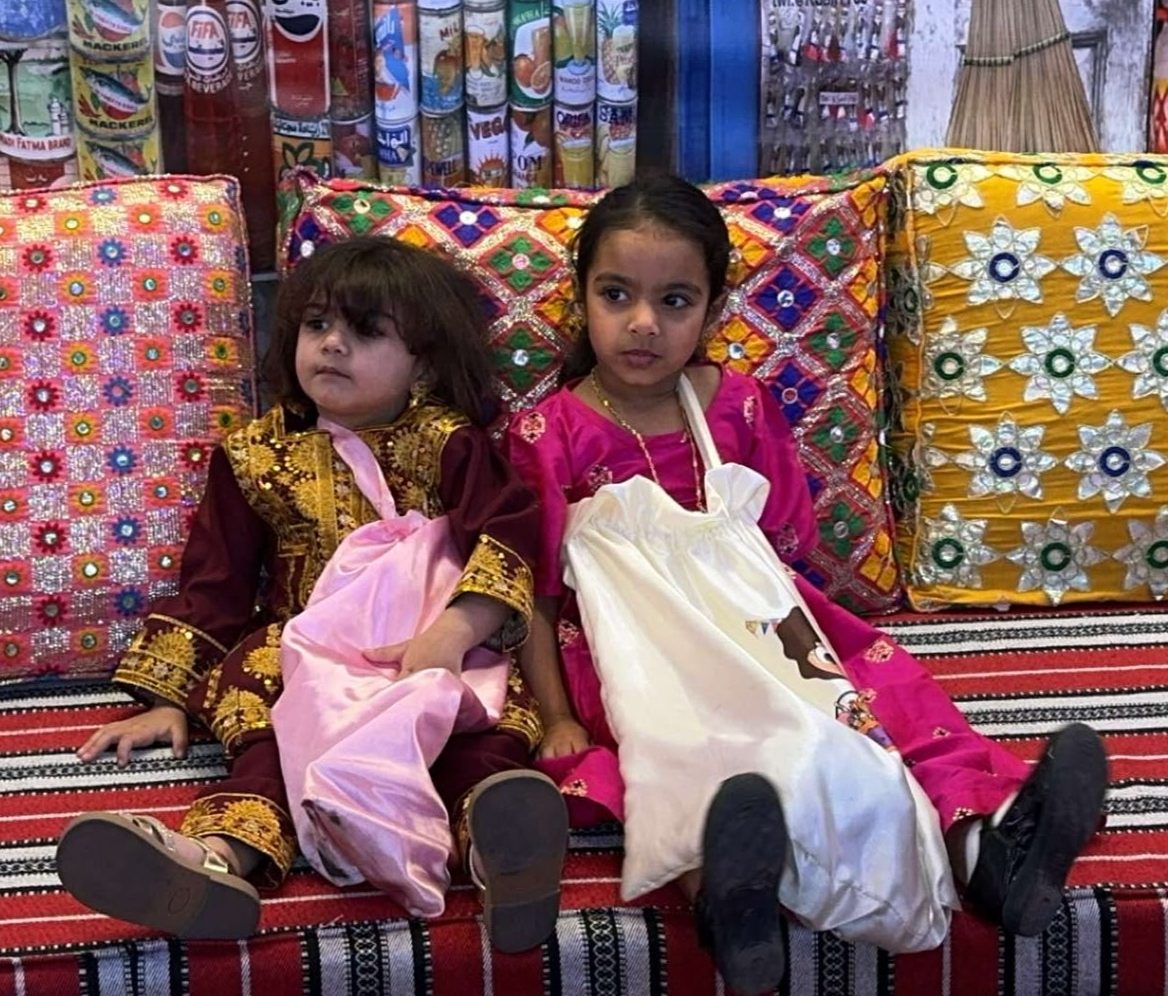
“Children participating in Gerga’oon in Bahrain” Photo courtesy of Kawthar Ebrahim
By Kawthar Ebrahim
TAMPA, Fla. — Walking down the hallways of my dorm in October means stepping into a familiar American ritual: Halloween decorations on the walls, pumpkins on window sills, and endless conversations about costume ideas for the weekend.
To many of my peers, Halloween is the most important part of the fall season. But when looking at it as a student from Bahrain, I can’t help but see a striking, comforting parallel to a tradition back home: Gerga’oon.
Celebrated on the 14th night of Ramadan across Bahrain and the Gulf, Gerga’oon is a mid-Ramadan festival where children dress in vibrant, traditional clothes — boys in thobes and girls in colorful, gold-embroidered bukhnugs — and walk door-to-door through their local neighborhoods. Carrying cloth bags slung over their shoulders, they sing generations-old heritage songs in exchange for nuts, dried fruit, and candy from their neighbors.
On the surface, the structural overlap between Halloween and Gerga’oon is undeniable. Both traditions center on taking to the streets, knocking on doors, asking for treats, and participating in a shared ritual while wearing special attire.
Like many mothers here in the States, mine also used to handmake my and my sister’s outfits for this special night. The excitement of hanging up the dresses on our wall, anticipating the next day of festivities, is very similar to the feeling I get when getting ready for halloweekend.
Experiencing both reveals subtle, beautiful differences in how two distinct cultures celebrate community.
Gerga’oon is deeply tied to Ramadan and its Islamic heritage. The songs sung at each doorstep are centuries-old, passed down through generations, celebrating the middle of the holy month and wishing blessings upon families who open their doors.
One of the most popular songs used to celebrate this night is “Gargaoon ‘Aadat Aleyna,” an anthem made famous across the region and lovingly rooted in modern pop culture by the beloved Bahraini comedy series Sawalif Tafash. The reward isn’t just about collecting candy; it’s an expression of hospitality, warmth, and neighborhood bonding during a spiritual season.
American Halloween, on the other hand, operates on seasonal imagination, playfulness, and creative self-expression. It permits people of all ages to step outside their daily identities for an evening. This transforms whole streets into temporary theater spaces filled with humor, nostalgia, and festive decor.
Navigating October as an international student at UTampa brings nostalgia. It feels strange to experience a quiet sense of homesickness for a Ramadan tradition that occurs during a completely different time of the year. This is simply because an American holiday mirrors its outer rhythm.
Even though the melodies, clothing, and cultural roots are vastly different, Halloween here offers a sweet, unexpected reminder of home. Seeing the campus light up with excitement during October bridges the gap between Tampa and Bahrain. This proves that no matter where you are in the world, the human impulse to gather, dress up, and share treats with neighbors remains wonderfully universal.