
By Luiza C. Beltrame
You’ve seen the headlines. SeaWorld Orlando was fined by the Occupational Safety and Health Administration (OSHA) after a trainer was hurt by one of the entertainment park’s five orca whales, adding to SeaWorld’s six safety complaints since August 2022. Just an hour outside Tampa, the Bay Area Renaissance Festival still offers elephant rides to festivalgoers, treating intelligent animals as little more than photo ops.
It’s not just at these shows or photo ops where animals are abused. At Orlando International Airport, Alison Lawrence was told her pet could not fly with her to Colombia. She drowned her white miniature schnauzer, Tywinn, in the airport restroom’s toilet and left his dead body in the trash. There are also countless cases of dogs being left behind when their owners move, abandoned at the side of the road, left in cradles after hurricanes, or tied up outside in the 100-degree Florida heat.
To Heydi Acuna, the co-founder of nonprofit animal rescue the Mercy Full Project, the solution comes down to one thing: education.
Normalizing Animal Abuse for Entertainment
When society normalizes animal suffering for entertainment, it teaches all of us — especially children, who make up the largest audience at theme parks, zoos, circuses, fairs, and animal “sanctuaries” — that this suffering is natural and even fun. Children, at the most formative and impressionable age, see animals in these places being framed not as living beings but as entertainment, as disposable things, and often don’t understand that it is wrong.
“We’re teaching them to look, not to care,” said Acuna.
This mindset doesn’t end at stadium gates; it trickles and sneaks down into our homes, neighborhoods, and shelters. By treating animal abuse as normal, our society becomes desensitized to animal suffering.
“If you’re teaching children it’s okay to manipulate and control animals, they’re going to grow up to be abusers too — in the back of their minds,” said Acuna.
Ignorance doesn’t always look cruel. Sometimes, especially to children, it just looks like wonder.
Take me, for example. When I was 10 years old, I got punched in the face by a dolphin. Now, I wish I could apologize to the dolphin.
My family took me to a “swim with dolphins experience,” and while taking a “kiss” photo op, the animal bumped its snout into my jaw with full force. Dolphins are the only sea animal that can kill sharks, and they do it by pulling this exact snout punch move. I guess I was a strong kid, or maybe just more stubborn than a shark.
The dolphin punched me, but I was the one hurting him. I look back on this, and all I feel is honest disgust that I ever participated in an experience like that in the first place. Of course, I was a child, and my parents didn’t know better either. The episode led to my family researching the experience, and that’s when we realized how unethical it all was. We asked in advance, and the crew told us the dolphins were well taken care of. Nobody who wants to make a profit off an animal would tell us otherwise.
According to the Dolphin Project, dolphins who are used for entertainment at marine parks or swim-with programs are confined to tanks far smaller than the vast oceans they’d roam in the wild, where they swim up to 60 miles a day and live in complex social groups. In captivity, they’re often housed with unrelated dolphins. This disrupts their entire life and social structure, leading to aggression, stress, and psychological suffering. Many also develop ulcers, weakened immune systems, and even chemical burns from the chlorinated water meant to keep tanks clean for human visitors.
The dolphin that punched me that day wasn’t being playful — he was likely frustrated, overstimulated, or in pain. I was too young and too uneducated to understand that I was part of the problem.
Debbie Metzler, the senior director of Captive Wildlife at the People for the Ethical Treatment of Animals (PETA) Foundation, said in a recent news release that animals like dolphins or elephants are being treated as things to make a profit from.
“PETA is calling on the Tampa Bay Area Renaissance Festival to show noble elephants the respect they deserve and reject these abusive spectacles,” said Metzler regarding the elephant rides at the festival.
Domesticated Animal Neglect and Abandonment
This lack of education, not intention, leads to local animal neglect and abandonment. According to Heydi Acuna from the Mercy Full Project, this is the most common type of cruelty that the organization deals with every day. Many owners are unaware of how severely their pets are suffering. Some leave them behind during a move, believing — naively or carelessly — that the animal will somehow “figure it out.”

“People leave animals behind like trash, and the law doesn’t even punish them properly,” said Acuna. “You can get a bigger fine for littering than for dumping a dog in your backyard.”
She says that adopting and caring for a pet isn’t something to be done lightly. There is an immense need to plan before adopting, not just decide emotionally. We’ve justified so much abuse under the guise of tradition, entertainment, or convenience. If animals were to be as cruel to humans as humans are to animals, I doubt we’d even be here. Ironically, we can all take the biggest lesson in compassion fromanimals and be empowered by the fact that this empathy is also in our most intrinsic nature — we are animals, too, after all.
We also have to realize that most people who hurt animals aren’t inherently bad people. They’re just ignorant, and ignorance isn’t evil in itself. It’s not even wrong. The problem is when we refuse to move past it.
So, let’s move past it. There are thousands of resources to learn about, help, and promote animal causes.

How You Can Help
PETA — whose motto states that animals are not ours to use for entertainment — states that “Every Animal Is Someone.” The organization also offers amazing free empathy kits for those willing to start the change. For more information, visit PETA.org or follow PETA on X, Facebook, or Instagram.
University of Tampa students also have the opportunity to volunteer at one of our amazing campus organizations, like Happy Tails or PAWS, or at local no-kill shelters like the Mercy Full Project, which is a four-minute drive from campus.
If you live off campus, students can foster a pet from Mercy Full, or if you’re on campus, there is the option of taking one of the shelter’s pets for a “Doggy Day Out!” You can also donate, especially as the shelter is currently going through an abnormal intake of animals, though it refuses to leave any of them behind.
Our sheer dependence on convenience also allows animal cruelty to persist. It’s often hidden in the way companies source, test, and produce the objects we use every single day. However, this also offers an opportunity to fight for the cause practically, and that’s simply paying attention to where you shop.
“Know where your coffee, makeup, and food come from,” said Acuna. “Everything we buy can either support cruelty or fight against it.”
Luckily, there are plenty of resources to help you be a conscious shopper. For a list of animal cruelty-free brands, you can check out PETA’s database. For some revelations of brands that are not yet cruelty-free, you can consult PETA’s database for companies that still test on animals or commit other acts of animal cruelty in 2025.
Maybe this piece is just my formal apology to the dolphin who punched me. Or maybe it’s just a statement to the boundless resilience and hope for a better world from organizations like the Mercy Full Project and PETA that battle against the rising tide of animal cruelty every single day. Maybe it’s a thank you to the team at these nonprofits. It’s certainly a call to action.
As a piece of advice, Acuna said that we should help however we can and wherever we can.
“Fight against what’s wrong,” she said. “Any human being knows what’s wrong and what’s right. It’s just our natural consciousness.”
The moment you know better is the moment you’re responsible for doing better.
–
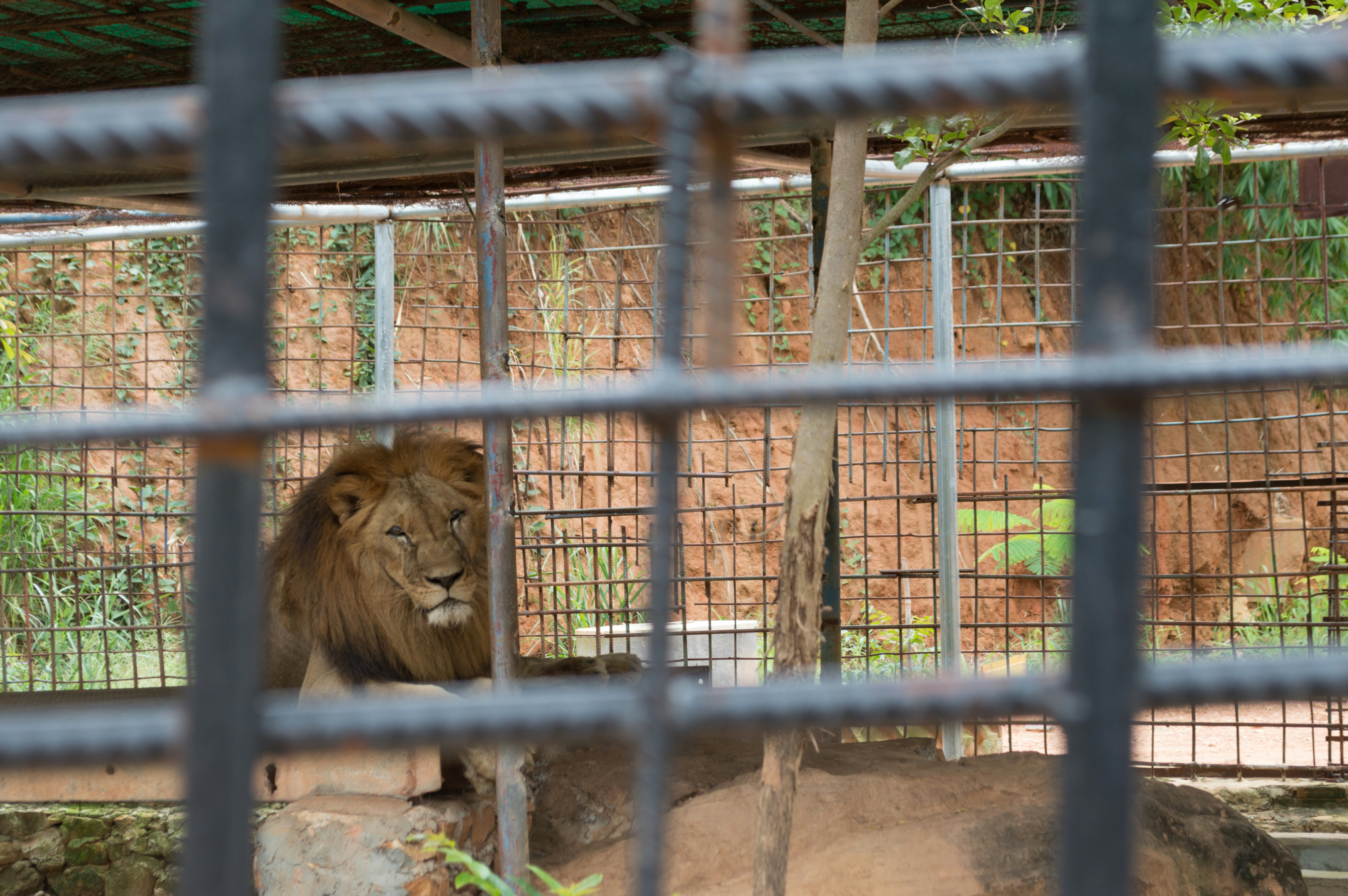
Thumbnail image caption: Lion in a cage. Thumbnail courtesy of photo by niiiiiiiiiQ, via Unsplash.