

Photo Courtesy of Thomas Mangieri
By Jaide Edwards
TAMPA, Fla. — Tampa Animation Festival held discussions about coming into the film industry and exploring possibilities of stop-motion animation, during this time together the filmmakers, industry professionals and animation lovers came for four days of screenings at the University of Tampa.
For its 2026 festival, held from Nov. 5-8 taking place at the Charlene A. Gordon Theater, Ferman Center for the Arts, showcases a variety of excitement with placements of 147 and 12 programs ranging from student projects, international films, short films, comedy, horror and Florida-based shorts. The audiences had a great opportunity to experience the program of animation through selective artistic styles, and had a chance to network with the creators of these productions.
The opening evening event featured a panel discussion themed around “working and film and animation from Florida.” Upon entering you see a gallery of displays in the hallways leading into the theater, an arrangement of red cocktail tables and a photo backdrop available for guests at the event festival.
Speaker guests include Tim Searfoss, founder of Fire Pillar Entertainment and Jaimie Engle, writer and producer. During the session the panelist spoke on the animation industry, how to get into it and helpful advice for future creatives. As we got to the end of the session, the audience were given the opportunity to take part in an open question and answer discussion.
The engagement expresses the festival’s broader goal to present viewers with a chance to interact with the film and animation, rather than just watching flicks.
Gregg Perkins, festival director, his artistic direction has influenced his approach to storytelling for a long time.
UTampa’s chair Department of Film, Animation and New Media, also filmmaker, Perkins said his calling to filmmaking started with writing. During his time of studies with philosophy, screenwriting and stage as an undergraduate, his filmmaking projects stemmed from his college friends with interest in the field. That same interest led him into graduate school. He then pursued studies in multimedia, which included filmmaking.
Not only did he have a film background, but he dived into painting, which he said influenced his take to creating visual storytelling.
“The more I think about how the film festival comes together and how it relates to painting, the more I think painting is really central to the way I think about a lot of things I do,” said Perkins, director of the Tampa Animation Festival.
He says that his incorporation of color, layering and artistic painting still guides his work in film and the digital media. His influence also started with family members close to him, such as his aunt who was a photographer and his uncle, who was a painter and musician.
This crossing over of art forms is a stamp of the festival’s embrace of animation, and its many unique methods and artistic approaches.
According to Tampa Animation Festival, Founded in 2018 by Gregg Perkins, Warren Cockerham, and Santiago Echeverry. The festival was originally planned to take place every two years, the next edition was supposed to be held in 2020 but canceled due to COVID-19 pandemic that happened during that time the festival re-emerged in 2025, it will continue running annually moving forward.
The Film Tampa Bay, UTampa College of Arts and Letters, and UTampa’s Department of Film, Animation and New Media supported the festival.
For 2026 scheduled events included U.S. and international animated shorts, short films by students, documentaries, kids friendly programs and Florida produced productions.
The festival’s associate director and UTampa’s alumna Abby Byrne, for the first time joined the team for this year. As a 2021 graduate with a degree in film and media arts and a minor in business administration, her career started in production theater during high school.
Reflecting on her first year with the festival, Byrne said the experience has been honoring because of the leadership and dedication with bringing it together.
“I feel like I’ve been super honored to work with such an amazing team,” said Byrne. “We all kind of have our own niche skills, and we’re all able to work together collaboratively.”
Reflecting on International reach, the festival received more than 800 submissions, according to Byrne. She also applauded the importance of welcoming back industry professionals to UTampa’s campus and being able to connect them with future students.
We were welcomed with one of the featured guests Brad Schiff, LAIKA head of animation and UTampa alumnus. Schiff made a delightful welcoming appearance to campus with three presented films of Wildwood, ParaNorman, and Kubo and the Two Strings.
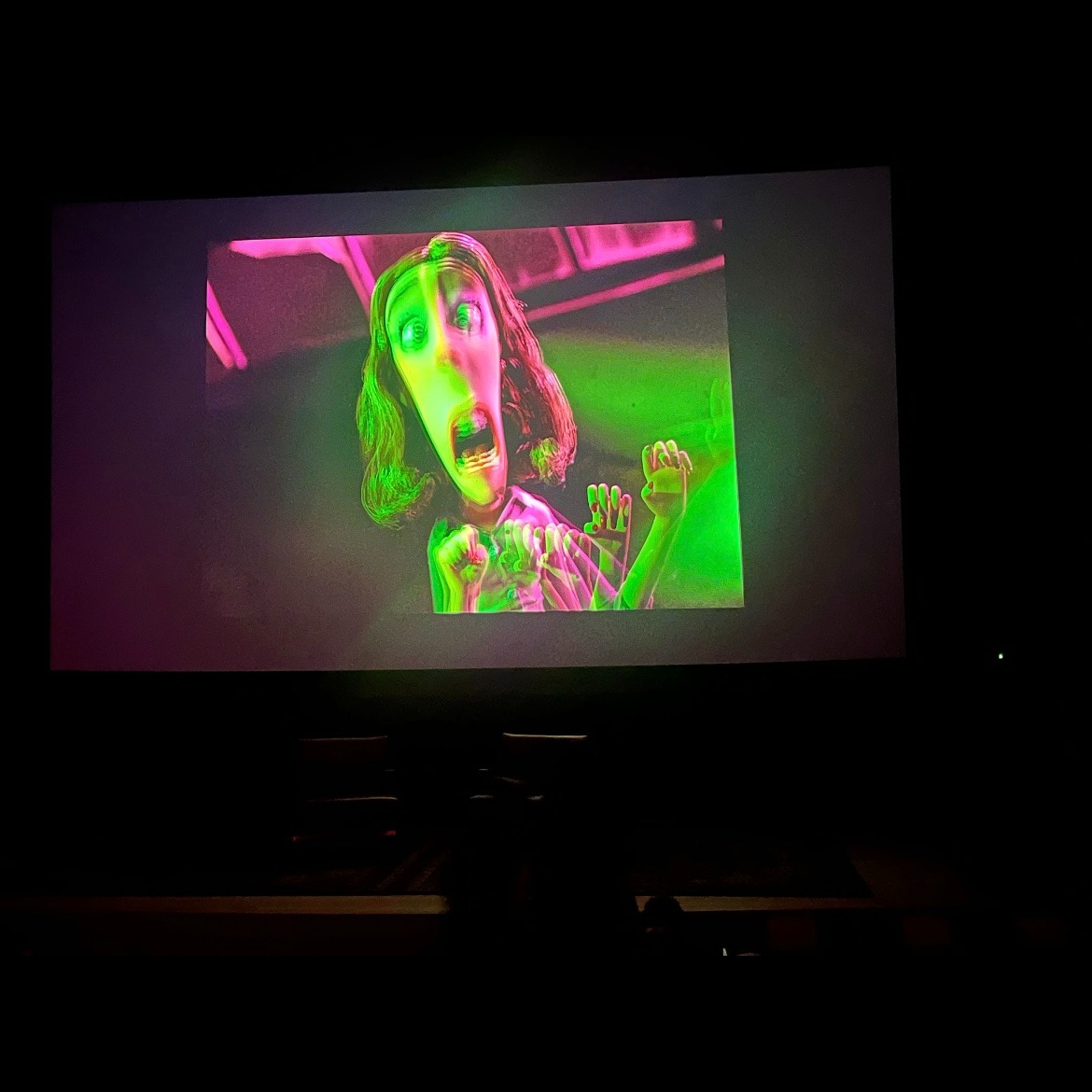
Photo Courtesy of Thomas Mangieri, viewing of ParaNorman at the University of Tampa
Schiff presented on opening night with Wildwood screening, following ParaNorman Friday night, ending with Kubo and the Two Strings on Saturday night. Leaving audiences with an unforgettable emerging experience of stop-motion and connection after the production.
During a discussion with Schiff about LAIKA, he pushed his animators to explore and challenge the possibilities of the medium.
Describing how the creative process is made on a single production and the next, said Schiff, “Every film is R and D for the next one.”
Over approximately 40 animators were involved with the film Wildwood. Including not only one but multiple responsibilities of artists making sure the same character comes to life in different shots.
“You don’t want it to feel like it’s done by 40 different sets of hands. You want it to feel like it’s done by one set of hands,” Schiff said.
Looking beyond the technical side of production, we see the growing change of technology within the entertainment industry. This highlights an ongoing conversation about animation. Perkins sees generative artificial intelligence as a much larger conversation when it comes to ownership, creativity, and technology in storytelling.
“The debate about who makes stories and with what technology matters all the more, and certainly film and animation are really at the center of that discussion,” said Perkins.
Meanwhile, Schiff sees stop-motion as the next level as an opportunity to take that form of art as a creative evolution. As digital equipment allows aspiring animators to improve movement and develop more realistic scenes, he says it’ll take a long way before those possibilities become exhausted.
“It’s beautiful to see somebody being able to create life in such an authentic way with their hands,” said Schiff.
Schiff highlighted the importance for aspiring animators entering the industry to always work hard and collaborate with others.
“Work your butt off, but most importantly, be nice,” said Schiff.
The Tampa Animation Festival will continue celebrating those who enjoy creating and offering creative insights that shape animation. The audience got a closer look of art forms that evolve through your screens, discussions with industry professionals and opportunities for future filmmakers.