
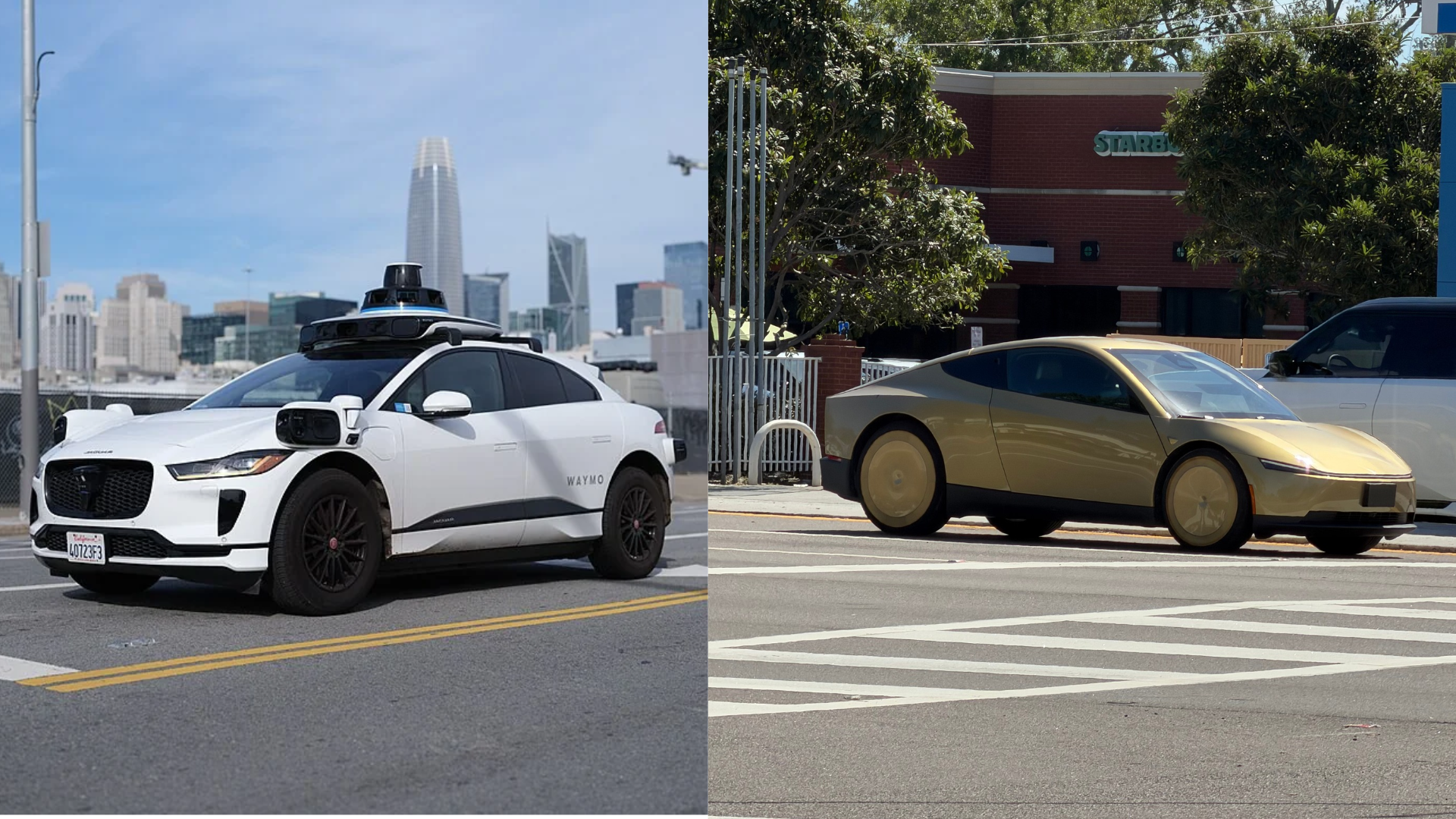
Waymo Photo courtesy of Dllu, via Wikimedia Commons / Tesla Robotaxi Photo courtesy of Jonathan Gallo

By Sophia Romana
TAMPA, Fla. — Waymo’s driverless taxi service opened to the public across Tampa on Oct. 14, providing students at The University of Tampa and local residents with a new transportation option amid growing excitement and safety concerns surrounding autonomous vehicles.
Waymo first launched its driverless taxi service in Tampa in September, initially requiring passengers to have an activation code to request a ride. According to WFLA News, the company has since removed that requirement, allowing anyone within its nearly 50-square-mile service area to book a fully autonomous ride through the Waymo app. The service covers several Tampa neighborhoods, including Hyde Park, Westshore and Temple Crest.
Jonathan Gallo, a senior computer science major at UTampa, believes driverless vehicles offer safety advantages through their use of cameras and sensors to continuously monitor surrounding traffic.
“They’re always watching no matter what. They don’t fall asleep, they don’t get tired. You know, they don’t get distracted,” said Gallo.
Gallo also highlighted the different technologies used in autonomous vehicles, including Tesla’s Robotaxi service, which launched in Tampa in July. While Waymo uses cameras and light detection and ranging (LiDAR) sensors, Tesla relies solely on cameras, without LiDAR sensors.
He also pointed to Tesla’s use of real-world driving data collected from customers using its Full Self-Driving software. He believes this gives Tesla an advantage in developing autonomous driving technology and can possibly be safer compared to Waymo.
Gallo also sees potential financial benefits for UTampa students, believing competition could lower ride prices, particularly for students traveling home from bars or other outings.
Despite his enthusiasm for these technological advancements, Gallo also recognizes concerns about autonomous vehicles.
“I do think the concerns about them blocking traffic and making dumb decisions are important,” said Gallo.
Those concerns were highlighted in an incident involving a group of UTampa students riding in a Waymo after a Tampa Bay Buccaneers game on Oct. 4.
According to WUSF, the students were traveling from Raymond James Stadium back to campus when their Waymo reportedly remained stopped for approximately 30 minutes, prompting other drivers to honk and the passengers to contact Waymo support. The vehicle eventually turned into oncoming traffic before stopping without a collision.
The students exited the vehicle and walked approximately 40 minutes toward campus before taking an Uber home. Despite the experience, one passenger, Matthew Reardon, told WUSF he would consider using Waymo again, but not around large crowds.
Waymo acknowledged the incident in a statement to WUSF, saying the vehicle briefly entered a temporary one-way street before its team corrected the issue.
Similar concerns have been raised by Dr. Brianne Sardoni, a professor at UTampa and Tampa resident, who described an experience while driving behind a Waymo at the intersection of Gandy Boulevard and MacDill Avenue.
She said the vehicle appeared not to recognize a left-turn signal, leaving her and other drivers waiting through an additional traffic light cycle.
“We had to go through one whole cycle of the light before any of us could move or turn because it just didn’t catch the light,” she said.
Sardoni also expressed concerns about passenger drop-off locations, saying her students have told her about Waymo vehicles dropping them off away from their intended destinations, requiring them to walk the remaining distance.
She said students have reported being dropped off away from their intended destinations, with one describing feeling unsafe while walking the remaining distance.
Although she acknowledged that Waymo can sometimes be cheaper than traditional ride-sharing services, she questioned how well the vehicles navigate Tampa’s local traffic patterns.
As Waymo becomes a more common transportation option around UTampa and throughout Tampa, students and residents are weighing its potential convenience and affordability against concerns about traffic and passenger safety.