
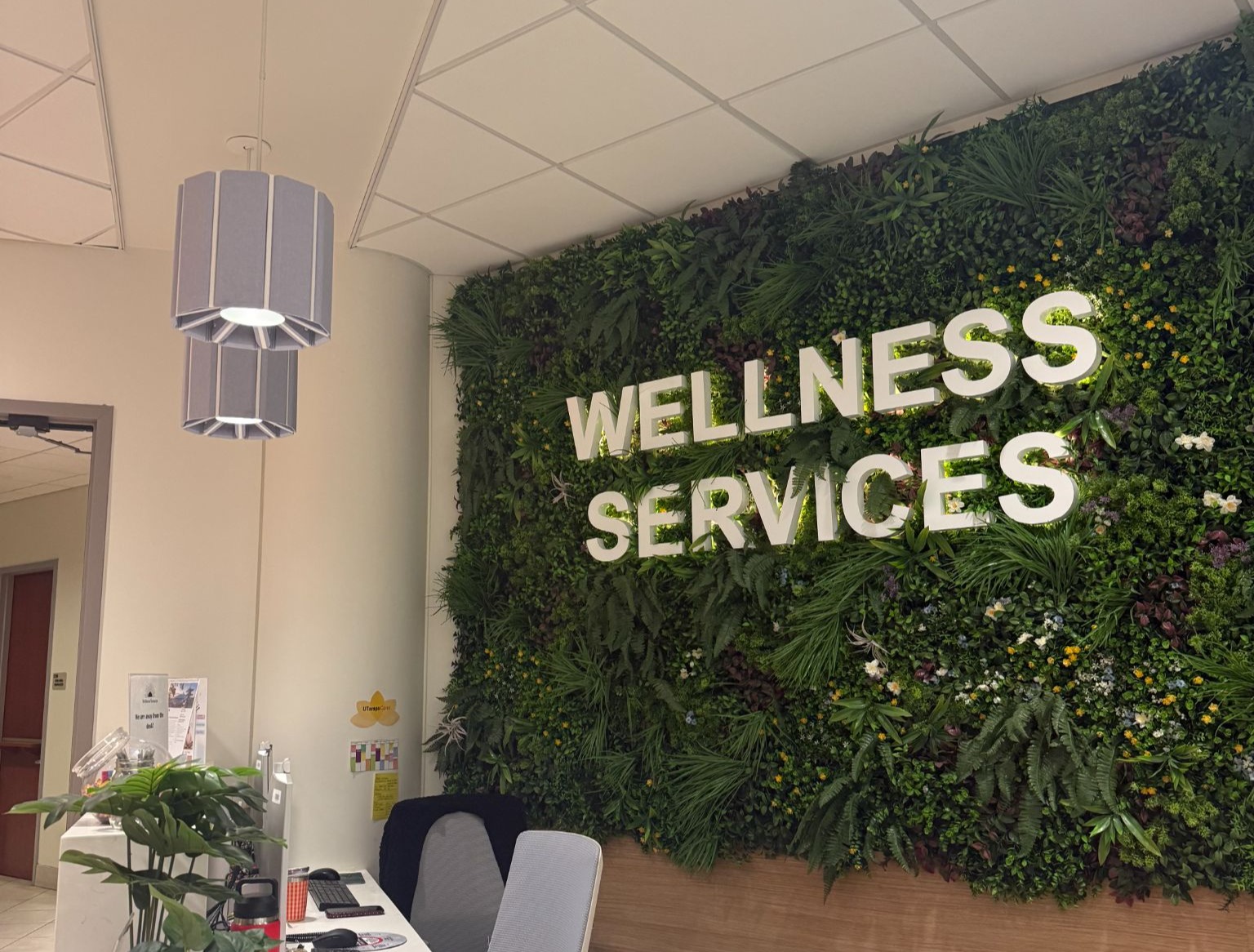
Photo Courtesy of Amber Louis
Located in Vaughn Center, the Wellness Suite provides daily services to students interested in improving multiple factors like mental health, sleep, nutrition, resilience resets, and other holistic wellness topics.
By Amber Louis
TAMPA, Fla. — One of the University of Tampa’s (UTampa) missions, according to Student Affairs, is to “educate, support and empower students through holistic, experiential and diverse learning opportunities.”
UTampa has dedicated resources for student wellness since the 2010s, with LiveWell hosting events since 2016. Last year alone, LiveWell hosted over 200 campus-wide events.
Addie Carothers, director of wellness and UTampa alum, has been in the department for over 11 years and has seen exponential growth. Starting with LiveWell and branching out, there are many resources and strategies to support students’ wellness routines.
“With the peer education that comes through LiveWell… they’re out there talking to students, and they’re giving them information,” Carothers said. “We needed to step up a little bit more to provide that…let’s sit down and talk about you and your well-being, and here’s some tangible things that you can do to be better taking care of your well-being. That’s where things started to be born, like our pure wellness coaching program and things like that.”
Sophie Mulconry, peer educator and student coordinator of LiveWell, advocates for the priority of wellness for college students, as she emphasizes the importance of balance.
“Wellness is about balance across all parts of life, from physical health, emotional wellbeing, and the relationships you build along the way,” Mulconry said. “With the topics my team focuses on, alcohol and other drug education, sex and relationship education, and physical and emotional wellbeing, wellness comes down to students having the knowledge and confidence to make informed choices for themselves, without feeling judged for asking questions.”
As Wellness at UTampa became more “intentional, conversational and personalized,” as Carotherrs put it, Peer Wellness Coaching was introduced and allowed students to get one-on-one help with other students. Creating this bridge between LiveWell students and students seeking wellness opportunities is made and utilized.
Maria Eduarda Astolfi Nucci da Silva, a senior peer wellness coach, has experienced progress firsthand with multiple clients in her time with Wellness Services.
“Being a Peer Wellness Coach means being able to offer students the support and motivation they might need to achieve their goals by offering a peer perspective,” Silva said. “I noticed that most students seek support in managing time, stress, academic-related focus, and mainly maintaining overall well-being. I also notice that many students are looking for healthy habits to balance academic and personal life.”
According to Mulconry, common topics students come to wellness to seek guidance for are “managing stress and anxiety, time management and organization, building healthy habits and routines, motivation and goal setting, work-life-school balance, sleep and self-care, social connection and relationships, physical activity and nutrition, adjusting to college life and connecting with campus resources.”
Silva also affirmed that similar topics are discussed in her one-on-one sessions.
“I noticed that most students seek support on managing time, stress, academic-related focus, and mainly maintaining overall well-being,” Silvia said. “I also notice that many students are looking for healthy habits to balance academic and personal life.”
To schedule an appointment with a Peer Wellness Coach, students can log into Navigate, click “Get Assistance,” select Wellness Services, then Peer Wellness Coaching, and pick a date and time that works for them for the free three-session program.
Mulconry explains in detail what students can expect when they go through the three-session program with Peer Wellness Coaching.
“The first meeting is about getting to know you — your goals, strengths, and what you would like to work on,” Mulconry said. “From there, you and your coach build a personalized wellness plan together with practical strategies and campus resources that fit your lifestyle. The third session is a check-in to celebrate progress and adjust the plan, so it sticks beyond coaching.”
Multiple tangible and intangible resources are available to all students in the Wellness Suites. These include but are not limited to: ‘Snooze, or You Lose’ sleeping kits, De-stress kits, access to the wellness room with massage chairs, diffusers, and relaxing music, Peer Nutrition coaching, Alcohol and Other Drugs recovery, and more. Visit the Wellness page of the UTampa website for more information.
In addition to and separate from Wellness Services is UTampa Cares, an institution-wide commitment to student well-being in all aspects, which Carothers believes “speaks volumes… an entire university committing to supporting students.”
“I think wellness is definitely something students are paying more and more attention to. I think it’s definitely a hot topic in social media,” Carothers said. “I think wellness is really just making choices and taking action towards holistic health. That can look different for everyone. Wellness is so vast.”
Find your balance in Wellness by visiting Suite 230 in Vaughn Center to utilize its fruitful resources or by booking an appointment with a Peer Wellness Coach.