
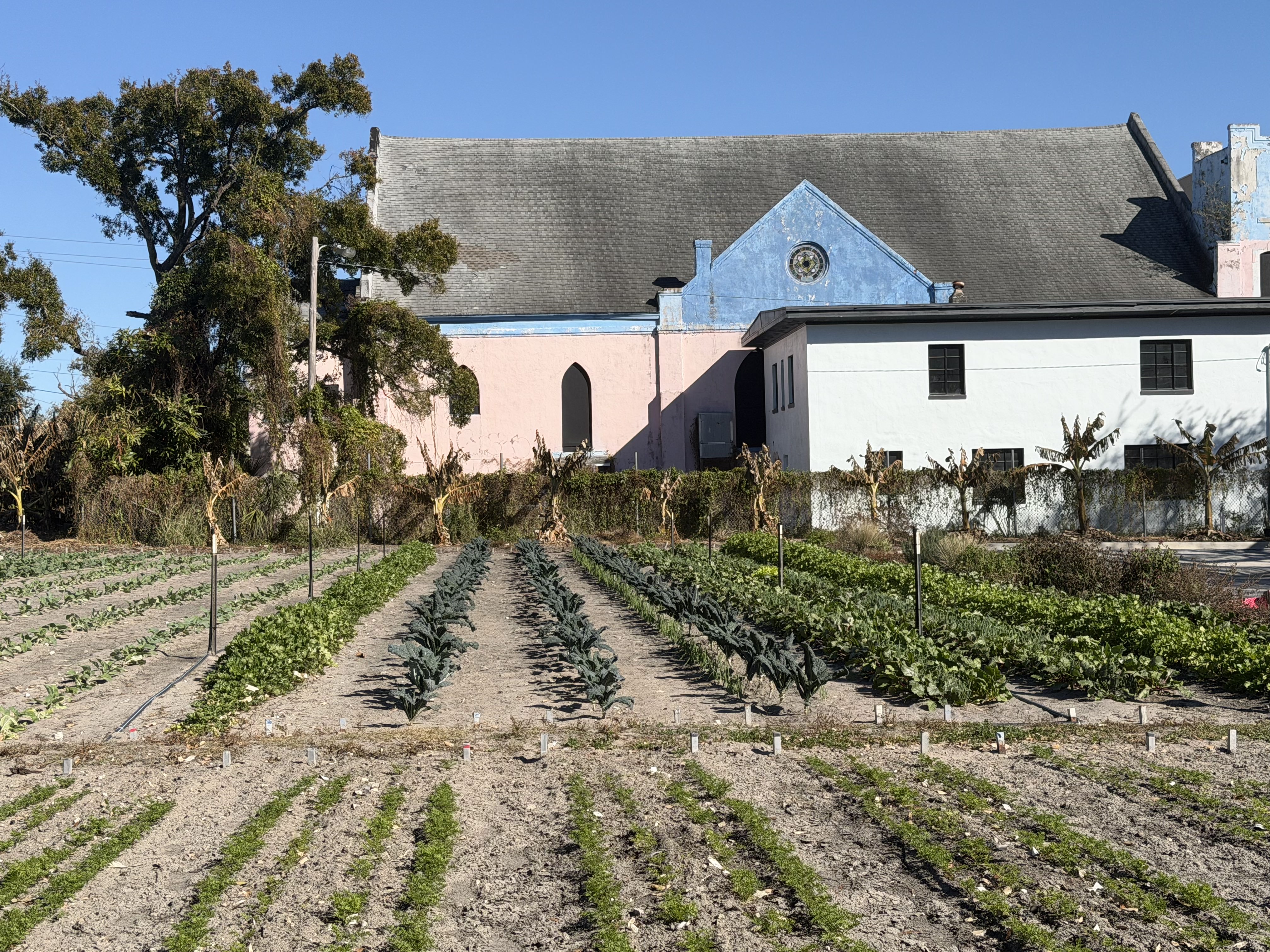
Cropfields after the cold snap at Meachem Urban Farms. Photo courtesy of Nicole Droeger Stephens.
A “bomb cyclone” passed over the state, with freezing temperatures impacting the environment.
–
By Nicole Droeger Stephens
TAMPA, Fla. — A winter storm passed over Florida last weekend, bringing in freezing temperatures and reports of snow flurries across the Tampa Bay Area. The effects of this storm impacted farming, wildlife and electricity.
The Weather Channel reports the cold snap intensified into a bomb cyclone. Dr. Nick Grondin, associate professor of environmental studies at the University of Tampa, explains that the storm was a mid-latitude cyclone that rapidly intensified.
“These types of systems are more likely to develop when extremely cold and dry arctic air masses from northern Canada move south into warmer, typically humid air masses,” Grondin said. “What typically makes bomb cyclones unique to other mid-latitude cyclones is that they are usually associated with extreme snowfall amounts and particularly strong winds near their center.”
Grondin explains that the cyclone developed over the Gulf and spread across the state, bringing cold fronts from Central Florida toward the Bay Area.
“We get gusty winds, moderate to heavy rainfall, and usually, after it passes, cooler temperatures with lower humidity,” Grondin said.
The temperatures dropped to the point that frost developed. Raymond Smith, farmhand at Meachem Urban Farms, shares that the cold snap caused crops to slow in growth.
“Most of the stuff we had was in the Brassicaceae family, which is, like, your cabbage, kale, broccoli, and they are pretty cold-tolerant,” Smith said. “Mostly the tropical stuff was where that hurt.”
Smith shares that the bananas, pineapples and mangoes took the hardest hit. He explains the farm had to purchase frostcloth to protect the crops during the cold snap.
“If we get any more frost in the future, we are prepared now.”
The Florida Fish and Wildlife Conservation Commission (FWC) issued an executive order on Jan. 30 that temporarily allowed citizens in Southwest Florida to remove cold-stunned green iguanas and bring them into FWC offices. Green iguanas are classified as an invasive species, the FWC stating they “cause damage to residential and commercial landscape vegetation.”
The FWC reported the removal of 5,196 cold-stunned green iguanas during the executive order. The order has been lifted and a permit is once more required to humanely remove or kill green iguanas.
Colder temperatures led to a higher demand for electricity. Duke Energy shared that the heating systems would have to work harder during cold spells to maintain warm temperatures. This leads to higher electricity bills. They requested on Feb. 1 that consumers conserve their power from 5–9 a.m. on Monday, Feb. 2nd. They claimed it was to “protect the grid and keep electricity flowing for as many customers as possible.”
Duke Energy released a statement on Feb. 2 thanking customers for conserving energy, claiming it “helped lessen strain on the electric grid and supported reliable service.”
The winter storm has concluded. Temperatures in Tampa are projected to rise throughout the month, with an average high of mid-70s and an average low of mid-50s.