
TAMPA, Fla.– At universities across the country, including The University of Tampa, young voters are moving from passive observers to active participants in the political process and reshaping how campaigns approach them.
Historically, young people, especially college students, have been seen as politically apathetic and often disengaged from the election process. Data from the Center for Information & Research on Civic Learning and Engagement (CIRCLE) showed that nearly 50 million people aged 18 to 29 were eligible to vote in the 2024 election. However, poll data shows that only 42% actually voted.
Although turnout in 2024 was lower than in 2020, which was estimated at 50%, it remained higher in key battleground states like North Carolina, Pennsylvania, and Wisconsin, where the average turnout was around 50%. In the two elections in which Generation Z has been eligible to vote, young voter participation is on the rise.
At UTampa, students like Madison Klimansky, 20-year-old sophomore finance major, are proof of growing political engagement. A self-identified conservative, Klimansky has been politically active on social media for over four years and believes that Gen Z conservatives face unique challenges.
“Gen Z conservatives are in a constant battle with being judged for holding traditional values,” said Klimansky. “Many want to normalize normal and steer away from any forms of indoctrination.”
For Klimansky, navigating these challenges requires not just advocating for conservative views but also fostering respectful and open dialogue.
“Speak with facts, not feelings, and listen, listen, listen to others,” said Klimansky. “The key to a civil and kind world is to act with kindness, respect, and contentment, regardless of political beliefs. At the end of the day, agreeing to disagree is the most civil approach.”
The rise in political activism on campus is not without its tensions, said 20-year-old Matthias Rowe, sophomore criminology and criminal justice major and president of a conservative club at UTampa.
“Gen Z conservatives have one of the toughest periods of time expressing their views,” Rowe said. “Talking to people of all different backgrounds, a common trend I have heard is that there is a fear to talk about our beliefs.”
Despite this, Rowe believes that campus groups like Turning Point USA play an important role in engaging young voters by creating spaces for political discourse.
“I see our role as enforcing the right to freedom of speech in all settings on campus and very simply sharing our values and policy ideas with students and expanding our presence on campus,” said Rowe.
These groups have gained traction on college campuses, providing a platform for students to engage politically.
One of the biggest reasons Gen Z is becoming more politically involved is the influence of social media. Platforms like TikTok, Instagram, and X give candidates a direct way to reach young voters — right where they spend most of their time.
The use of social media by politicians and celebrities alike has allowed Gen Z to interact with the election in a way previous generations could not.
For students like 19-year-old Jasmine Best, a first-time voter and sophomore entrepreneurship major at UTampa, TikTok played a significant role in how she learned about the election.
“I kept seeing both parties have a strong social influence, and I was mainly looking at Kamala Harris and her account,” said Best. “I also saw different actresses and artists I enjoy show their support for Harris.”
Best said Kamala Harris’ campaign resonated with her because of its focus on diversity and social issues. Representation in politics plays a critical role in shaping how young people perceive themselves in the larger societal landscape, Best said. For some, seeing a figure like Harris rise to one of the highest political offices in the country was a powerful moment of affirmation.
“As a young Black female in college, I think representation matters, and seeing a person like Kamala Harris was inspiring,” said Best.
For many young voters, the 2024 election was not just a choice between candidates but a moment of navigating personal identities in a deeply polarized political landscape.
Kailey Aiken, 20-year-old junior writing major at UTampa, said that as Gen Z steps into the challenges of the world they are inheriting, it is their duty to work toward creating positive change.
“I think Gen Z feels responsible for addressing issues like climate change because, even though we didn’t directly cause much of it, we feel the need to take action to fix it — even if it can’t be fully resolved,” said Aiken.
For Nisha Punwani, a 23-year-old Harris supporter and senior journalism major with a criminology and criminal justice minor at UTampa, this experience was shaped by a heightened sense of vulnerability felt by many immigrant communities during the Donald Trump administration.
Under his leadership, policy changes often felt like direct assaults on their rights and safety.
“I’m a naturalized citizen and have family and friends who are immigrants living in the U.S. who have not gotten naturalized, so Trump’s policies affected us a lot,” said Punwani. “I’m trying not to be worried, but I also now know I need to carry some form [of ID] showing I’m a citizen at all times. So yeah, I’m very angry.”
Punwani’s anger is not just a personal reaction but a reflection of the broader emotional divide within Gen Z.
“At our school, we have a huge population of Republicans. I personally do not engage with Trump supporters,” Punwani said, acknowledging the rift that exists even among her peers.
Despite the polarization, however, the urgency for change is felt universally.
“I am forever going to pay attention to the elections because I know they affect me and others around me,” said Punwani. “It’s not something I can ignore, and I hope others have educated themselves to see that no matter who you’re voting for or what you’re voting for, your vote does matter.”
Understanding the impact of voting is especially important for young people, and addressing the knowledge gap among students is an essential first step, Punwani said.
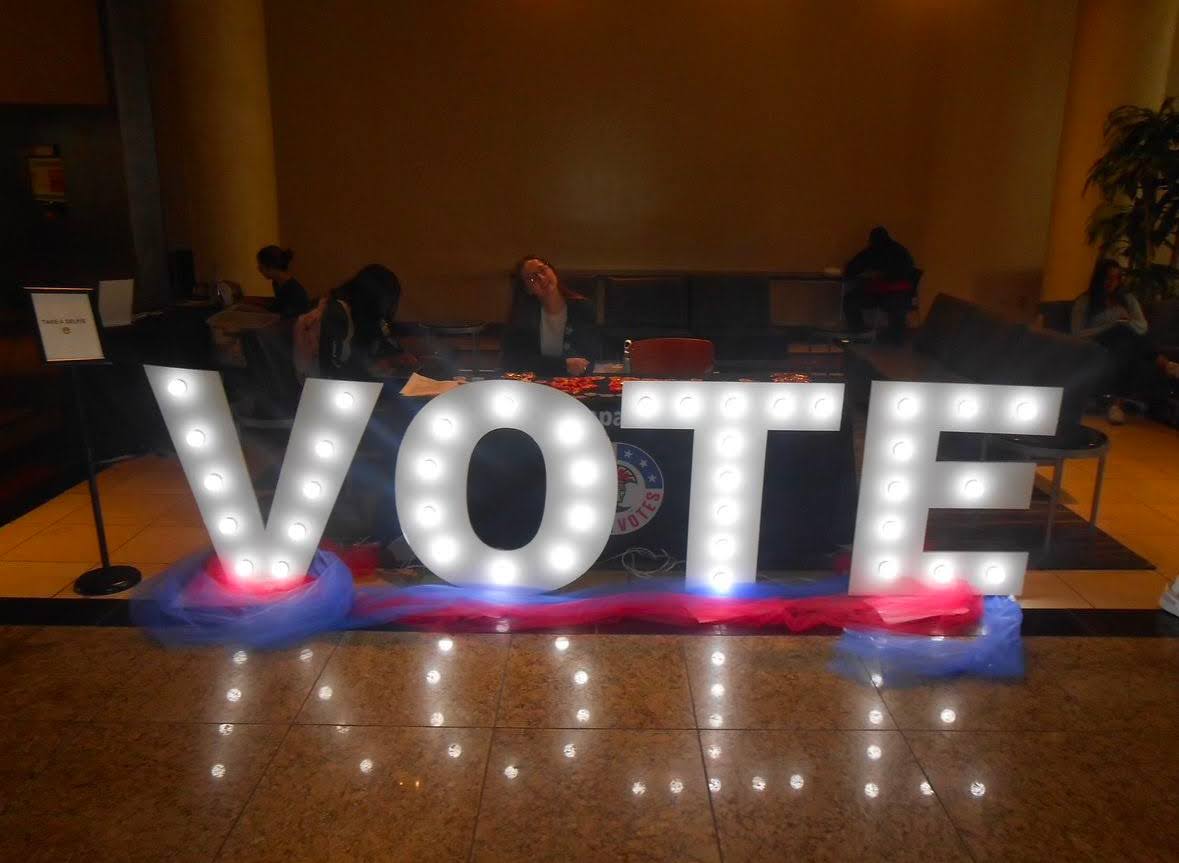
“A central issue we have observed is that students are confused and unsure of how the voting process works,” said 19-year-old Isabelle Arthur, the community engagement and student coordinator of civic engagement for UTampa Votes.
This lack of familiarity with the voting system has made students less likely to participate in elections.
To address this, UTampa Votes hosts tabling events throughout the semester to connect students with the resources and guidance they need. These events give students the opportunity to ask questions, register to vote in Florida or their home state, request absentee ballots from other states, and speak with representatives from the Hillsborough County Supervisor of Elections.
These efforts simplify the voting process, making it easier for students to register and access assistance directly on campus.
Additionally, the ALL IN Democracy Challenge Coalition at UTampa gathers voter registration and turnout data from the National Study of Learning, Voting, and Engagement. According to this data, UTampa’s voting rate increased by 17% during the 2020 election.
With the 2024 election results now in, the turnout of young voters is the highest it has ever been, and Gen Z’s political engagement shows no signs of slowing down. Whether through social media campaigns, campus activism, or volunteering for causes they care about, young people are becoming key players in shaping the future of American politics.
–
Photo courtesy of UTampa Votes.