
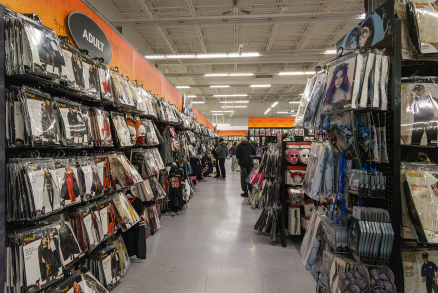
Photo courtesy of Dillan Payne via Wikimedia Commons.

By Sophia Romana
TAMPA, Fla. — For many college students, “Halloweekend” is one of the most anticipated weekends of the year, but the scariest part of the celebration might be the price tag.
From the last-minute costumes, expensive bar covers, and multiple nights out, the costs can quickly add up. However, college students found creative ways to celebrate without breaking the bank.
According to the National Retail Federation’s (NRF) annual consumer survey, Halloween spending continued to rise nationally in 2026.
Halloween spending in the United States was projected to reach an all-time high of $13.5 billion in 2026, surpassing the previous record of $13.1 billion set in 2025.
According to the NRF, the average consumer was expected to spend $115.14 on Halloween, compared to $114.45 last year. Even with higher spending projected, affordability remained a priority, with 34% of consumers saying they would look for items they could reuse or repurpose if prices were higher than expected.
For college students celebrating Halloween over multiple nights, costumes can become another major expense, especially when last-minute online orders and accessories start adding up.
Shopping secondhand at thrift stores like Goodwill, Plato’s Closet and local thrift shops around Tampa is one way students can save money on Halloween costumes. Reusing pieces from previous years and putting together outfits with clothes they already own can also help cut costs.
These alternatives allow students to enjoy dressing up for Halloween without having to purchase a brand-new costume for every celebration.
Beyond costumes, going out for multiple nights is another popular way to celebrate Halloweekend, but the expenses can quickly add up.
In Tampa’s popular nightlife areas like SoHo and Ybor City, many Halloween events require paid admission. MacDinton’s in SoHo advertised Halloween party tickets ranging from $19 to $50, while The Castle in Ybor City charged $20 to $25 for its pre-Halloween party.
Even at bars without cover charges, students still have to factor in the cost of drinks and transportation, making multiple nights out even more expensive.
Sophia Petersson, a senior business management major at The University of Tampa, kept her Halloween expenses down by creating her own costume using clothes she already owned and inexpensive accessories purchased online.
“Halloween is such a big event here in Tampa,” said Petersson. “But as someone who doesn’t care as much about it, I wanted to spend as little as possible on a costume so I could spend more on Halloween and fall activities.”
Petersson also chose to limit the number of nights she went out, and instead spent time with friends enjoying fall activities like baking seasonal desserts.
Planning affordable activities with friends offered another way for students to enjoy the Halloween season without the added expenses of going out every night. Baking Halloween treats, painting or carving pumpkins, and attending local Halloween events around Tampa were some budget-friendly options.
Campus organizations also offered discounted activities. Student Productions at UTampa hosted a trip to Universal Orlando’s Halloween Horror Nights, offering students discounted tickets and transportation to the event.
While students in cities like Tampa faced expensive nightlife costs, celebrating Halloweekend looked different in a traditional college town.
Averi Krebs, a senior at Towson University in Maryland, said bars near her campus only charged covers on certain nights, giving students more flexibility when planning their Halloween celebrations.
“My friends and I planned our nights this year around which ones are free to get in and on which night,” said Krebs.
Even with more affordable nightlife options, Krebs found ways to save on costumes. She reused pieces from previous Halloween outfits for one costume and purchased items from Shein and Amazon for two others, spending approximately $50 combined.
For Krebs, buying pieces of her costume online was cheaper than going to Spirit Halloween and getting a full set. By reusing pieces from previous costumes and shopping online, she was able to put together three unique Halloween costumes without having to purchase entirely new outfits.
Although Halloween costs varied between Tampa and a traditional college town, students found similar ways to manage their spending. By choosing which activities and purchases mattered most to them, they were able to enjoy the holiday while staying within their budgets.
Halloweekend may come with a hefty price tag, but students found that enjoying the celebrations didn’t have to mean spending above their means.