
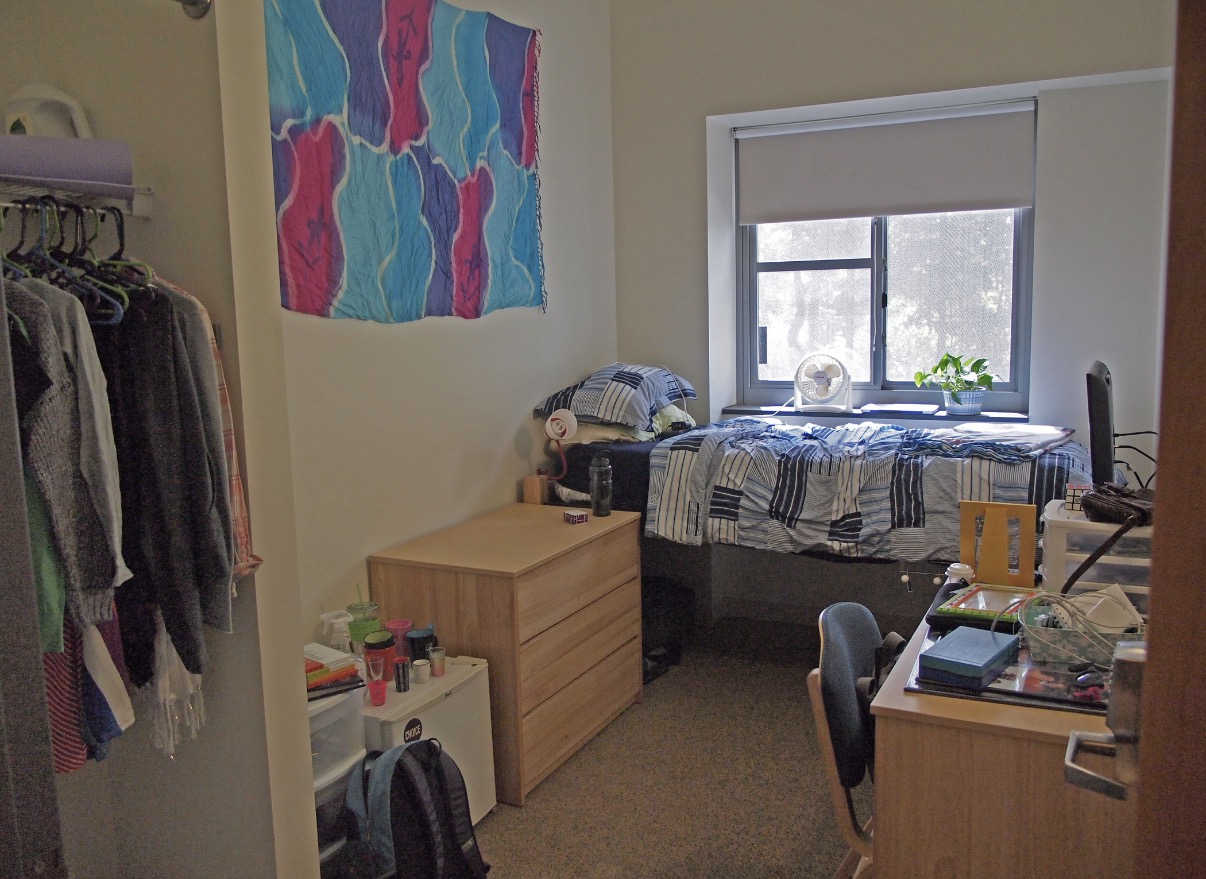
“An average college student dorm” Photo Courtesy of Flickr.
By Fiona Sheridan
TAMPA, Fla. — Bow-adorned, pink-plastered, soft and fluffy dorm room videos are thrust in front of women’s eyes on TikTok, Instagram, and Facebook every day.
The algorithm feeds off the engagement of those idealizing this picturesque facsimile of female college life.
Amazon wishlists are overwhelmingly marketed towards young women — often stocked with items completely overpriced due to their pink color and marketing appeal.
Another issue underlying the idealization of these sanitized depictions of dorm life is the romanticization of consumption.
Oftentimes, these dorm hauls rack up prices in the hundreds, if not thousands, of dollars. Easily, these influencers show off their $1,000 mattresses or $500 clothing hauls.
Occasionally, they exist on the opposite end of the spectrum. Influencers will market their content under a veneer of affordability by purchasing from unsustainable retailers like Shein or Temu.
Some creators with this style of video are even sponsored by the companies themselves and, per TikTok rules, are only required to disclose their partnership within the caption of the post.
These two elements — the desire for items and the female identity — can often intersect within the depiction of dorm hauls.
As influencers show off increasingly girlish items, they cultivate an audience of women who rely on their personal consumption to be entertained.
As audiences crave more items, more hauls, more money, financial strain compounds, yet remains invisible. The wealth they generate is idealized, while the realistic effort required to build it is ignored.
In a sense, the lives of those in a tax bracket above most college students are marketed toward them, without acknowledging the lack of realism in being able to purchase such a sheer amount of objects.
Additionally, the mass production of most items — typically the ones actually affordable by college students — creates a mirrored image. So many female college students own the same comforter set, same vanity, same desk chair, same everything.
“These are possessions that not only extend what we can do, but they represent us,” said psychologist Russell Belk in an interview.
Our individual possessions that scatter the planes of our rooms exist not only to be functional and serve us, but to represent individual identity.
“The house is not merely a possession or a structure of unfeeling walls,” states author Karen Lollar. “It is an extension of my physical body and my sense of self that reflects who I was, am, and want to be.”
When each room becomes identical to that of the one next to it, and the one next to that, and so on, we lose a sense of individual identity that comes as an extrapolation of the physical objects into something symbolic.
And when individuality is expressed through our personal space, it develops comfort. But when we allow consumerism and algorithms to pollute our personal interests, it further weakens one’s sense of self.