
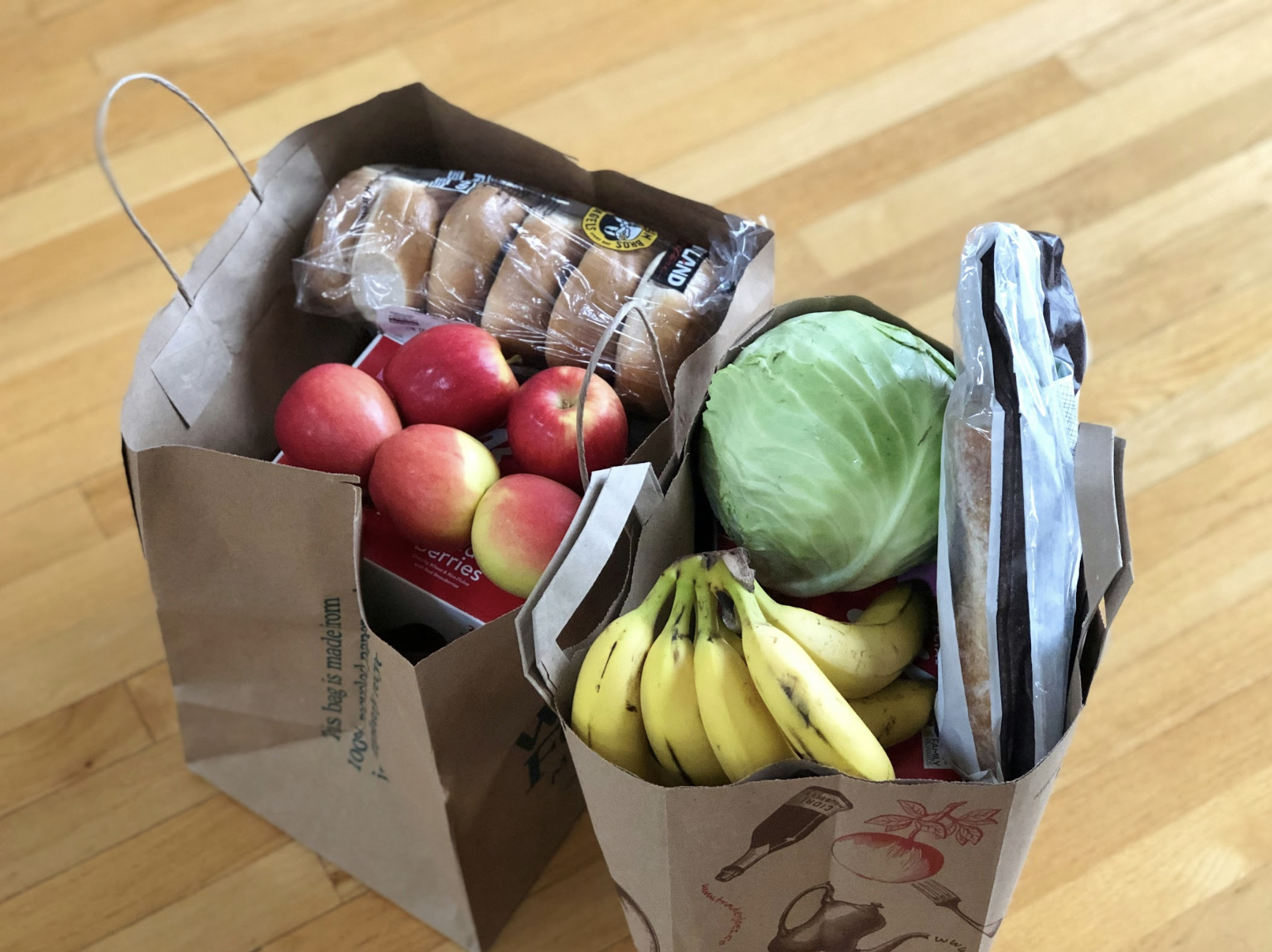
Photo courtesy of Maria Lin Kim via Unsplash.
SNAP delays after the government shutdown are leaving some Tampa Bay residents facing food insecurity.
–
By Genesis Aviles
TAMPA, Fla. — Delays in Supplemental Nutrition Assistance Program (SNAP) benefits during the government shutdown have left some Tampa Bay residents and University of Tampa students facing food insecurity, even as lawmakers move toward restoring the government’s funding.
When UTampa junior Mariana Montoya first applied for SNAP, she hoped the benefits would help her manage rising living costs after moving off campus. Instead, she said her applications were repeatedly denied despite financial strain.
“I have applied for SNAP three times,” Montoya said. “And was prompted more recently since moving off campus, no longer having a meal plan, and now having larger bills to pay because of rent and car insurance.”
Montoya said she first applied after Hurricanes Milton and Helene disrupted her income in 2024. As her financial situation worsened this semester, Montoya said she began relying on friends, church pantries, and community donations.
“As a person and most especially a singer, fueling my body is absolutely crucial,” she said. “This lack of food has truly affected my health, causing issues such as gastritis that I cannot afford to be treated for.”
Montoya said the SNAP application process itself became an obstacle.
“If your income is considered too high for SNAP, you will be denied,” she said. “But if your income is considered too low, they will also deny you, which is what happened to me.”
She said she hopes to see changes that better address student needs.
“There should be more resources at this school and in general for college students facing food and financial insecurity,” she said.
Kevin Fridy, chair of the political science department at UTampa, said the delayed SNAP disbursements stemmed from federal budget gridlock rather than changes to the program itself.
“I think the major issue was government funding,” Fridy said. “When the government is not operating, even programs Congress has dedicated funding for will not all get paid for.”
More than 40 million Americans use SNAP, Fridy said, and restoring benefits requires coordinated action.
“First, the U.S. House will have to pass the Senate’s budget,” he said. “Once that happens, the USDA will have the money in its account to make distributions.”
Fridy said he expects funds to begin moving soon, but cautioned that the exact timing varies across states.
Policy changes may also follow once funding stabilizes.
“Generally speaking, President Trump and Republicans in Congress have argued for more state control over what SNAP benefits look like and some combination of less expensive benefits and stricter requirements,” Fridy said.
He added that policymakers should weigh the balance between preventing program abuse and keeping access equitable.
“Sometimes the policies designed to prevent waste and abuse are so cumbersome that they discourage eligible people from applying,” he said.
For Tampa Bay resident Austin Chase, the suspended benefits raise questions about basic survival for low-income households.
“My concern is that its recipients have been starving because of the withholding of SNAP funds,” Chase said.
He said federal leaders should establish safeguards to prevent essential services from stopping during future shutdowns.
“It also needs to be impossible for the funding to be overridden, and impossible for the funding to be halted, no matter what the president or the Congress does,” Chase said. “Otherwise, the mechanism would be worthless.”
“I think anyone who knows basic information about the topic knows that SNAP gives food to Americans who can barely afford food or cannot afford it at all,” Chase said. “When that help disappears, people don’t stop being hungry.”