
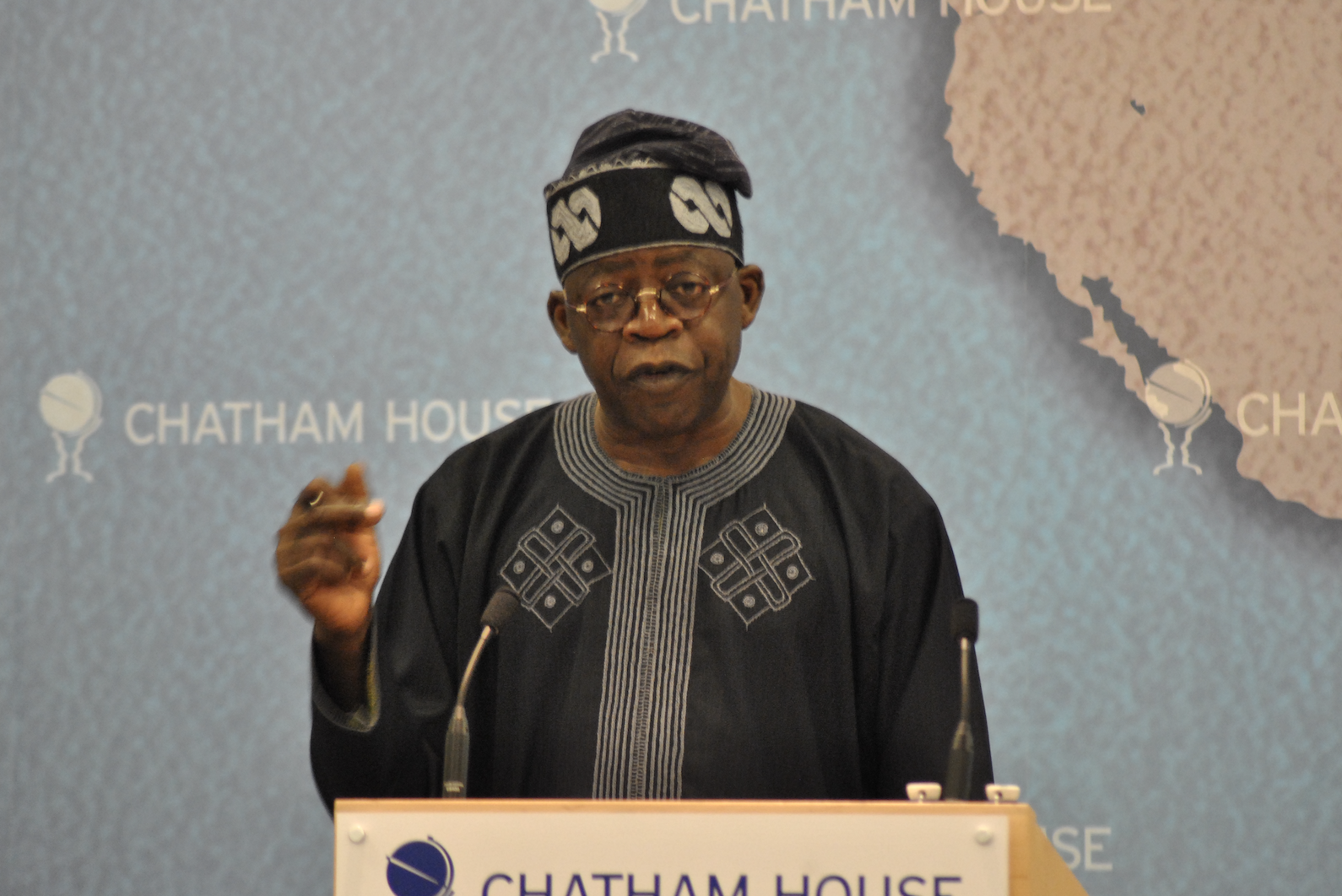
Photo courtesy of Chatham House, London. “Asiwaju Bola Ahmed Tinubu (5980497975)” by Chatham House is licensed under CC BY 2.0.
As violence against Christians in Nigeria becomes more severe, President Trump threatens military action, sparking political tension and debate over how far the U.S. should go to defend religious freedom abroad.
–
By Genesis Muckle
TAMPA, Fla. — On Nov. 1, President Trump ordered the Pentagon to be prepared for military action in Nigeria due to increasing Christian persecution. There has been an ongoing issue with religious persecution in Nigeria, with over 7,000 Christians killed this year alone.
This warning came shortly after Trump announced that he was designating the West African country for allegedly failing to put a stop to the persecution. Under the International Religious Freedom Act, the U.S. government named Nigeria as a Country of Particular Concern (CPC).
Meanwhile, the president of Nigeria, Bola Ahmed Tinubu, condemned Trump’s statement. He said that the Nigerian military is taking action to control the situation and stated that both Christians and Muslims have been victims of these religious hate crimes.
President Trump wrote on social media that “Christianity is facing an existential threat in Nigeria.” He ordered military and defense officials to be on standby and “prepared for limited operations” if the violence continues.
Designating Nigeria as a CPC has placed the country among the most serious offenders under the U.S. International Religious Freedom Act. This label opens the door for other punitive measures, though analysts believe that military action could be an extreme escalation.
According to a report by the International Society for Civil Liberties, over 50,000 Christians have been killed in Nigeria over the past 14 years, with violence primarily occurring in the Middle Belt and northeast regions.
Most of this violence is driven by conflicts that involve Islamic State West Africa Province (ISWAP), Boko Haram, and local militias. Though persecution is now coming to the public’s attention, religious freedom groups have raised alarms about the violence in Nigeria for years.
According to CNN, Nnamdi Obasi, a security analyst and senior advisor for the International Crisis Group, said that while both Christians and Muslims have suffered at the hands of extremist groups, bandit groups have primarily targeted Muslim communities in the northwest region.
Obasi said that the U.S. military operation against Islamist groups in Nigeria will not solve the other issues that have contributed to the instability in Nigeria.
He also urged the Nigerian government to make efforts to end the mass killings of civilians, regardless of their religious beliefs. He said leaders must confront the religious extremism that has plagued their country.
In a press conference in Berlin, Germany, Minister of Foreign Affairs Yusuf Tuggar stated that Nigeria’s constitution makes state-backed religious persecution impossible. He said these violent crimes affect all religious communities, not just Christians.
The Christian Association of Nigeria (CAN), an advocacy group drawing attention to the issue, stated in a press release that this is a real threat.
“Many Christian communities in parts of Nigeria, especially in the North, have suffered severe attacks, loss of life, and destruction of places of worship,” the organization stated.
The United States and Nigeria have had a long-standing partnership in aid programs. The comments by Trump could affect this partnership.
Trump’s decision to highlight Nigeria comes as religious-freedom issues gain more prominence in the U.S. Conservatives have praised the move, describing it as a stance against “global persecution of Christians.”
However, there are some who have criticized this action, warning that military threats could further destabilize the already fragile country.
Trump’s remarks have brought more global attention to the situation in Nigeria. Security and policy experts believe that the U.S. should be more involved in supporting Nigerian-led solutions rather than ordering a military intervention.