
By Reanna Fogelman
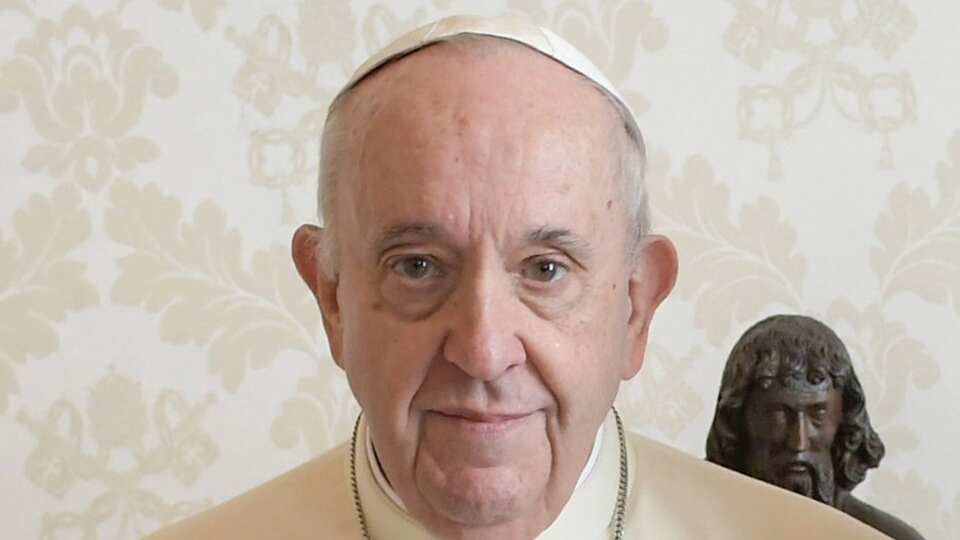
The 266th pope of the Roman Catholic Church, Pope Francis, served from March 13, 2013, till his death on April 21, 2025. Pope Francis was the first non-European pope in more than 1,200 years, the first pope from the Americas, and the first Jesuit pope.
Believers prayed on Monday in Pope Francis’ hometown in Buenos Aires, where he became known as the “slum bishop.” People crowded the cathedral where he preached as archbishop and lit lights in the church where he first encountered God as a child.
According to USA Today, “Pope Francis, or Jorge, was the eldest of the five siblings. … When he was elected pope in 2013, he had one living sibling, a sister named María Elena Bergoglio, who was 64 at the time.”
Francis was born on Dec. 17, 1936. His father, Mario, was an accountant; his mother, Regina, was a “committed wife,” according to the Vatican biography.
Francis rejected the idea of being driven for public transportation and settled for the luxury of a modest apartment instead of rich surroundings. He was a modest person.
Pope Francis was the first Latin American pope, and his teachings on unity, economic justice, and migration are still crucial today because of the widening political conflict.
The University of Tampa Catholic Organization fosters a community for students interested in the Catholic faith through weekly prayer groups, masses, and events, promoting faith development.
“I think that one [of] the clearest implications of his papacy has been a deeper understanding of Catholic social teaching and the role of love in Christian thought,” said Andrew Brinkman, the president of UT Catholic.
“It was common to hear pundits and journalists call him the ‘pope of the peripheries,’” said Brinkman. “I really do believe that his example of living this out held a great influence on me. If there was one word to describe his legacy it would be ‘compassion.’”
“The Vatican was naturally the first to announce his death, so when I found out there was no major news source [covering] the story,” said Brinkman. “At that point, I was rather certain it was a mistake. Even then I, and most people following the Vatican, had expected that following his 38-day stay in the Gemelli Hospital, he was back to adequate health.”
Despite his age and health problems, the majority of the world had anticipated that he would live a little bit longer.
“Even his last words seem to indicate such a pastoral message: ‘Thank you for bringing me back to the square,’ said Brinkman. “It appears that he might have been certain of his coming death and didn’t want to remain separated from his flock much longer.”
Pope Francis’s legacy is determined by his actions as well as his words, constantly prioritizing the needs of the underprivileged in his work.
“Of course, he is also very well-known for his interest in poverty and his distaste for ostentatious displays of wealth,” said Ryan Cragun, sociology professor at UTampa. “To what extent that led to massive changes in the Catholic Church I think will continue to be debated for quite some time. He objected to extravagances, so I don’t think the Catholic Church will do away with them any time soon.”
The pope cared about significant issues like poverty and was a simple man.
“Given that Pope Francis appointed nearly half of the current cardinals, it is possible that the progressive elements in the Catholic Church will be able to elect another progressive-leaning pope,” said Cragun. “But that isn’t certain.”
Pope Francis had a significant impact on the Catholic Church.
“The process for electing a new pope is one that dates back centuries, with the College of Cardinals coming together for an election process called a conclave,” said Rob Boelke, director of communications at Sacred Heart Catholic Church. “The conclave will begin following the nine-day period of mourning, known as the Novendiales. All cardinals under the age of 80 are eligible to vote, and the process takes sometimes between two to four days, as a two-thirds majority is needed.”
“Pope Francis was largely known as the ‘People’s Pope,’ having a close connection to the poor and marginalized throughout his time both before and after he became pontiff,” said Boelke. “Many within the Catholic Church this week, and I believe this will continue moving forward, will look to his example of inclusivity and compassion.”
—
Photo courtesy of Wikimedia Commons.
_FXD.jpg)