
By Ariana Fromm
TAMPA, Fla. — Florida lawmakers are debating House Bill 113, which aims to strengthen the penalties for fleeing or attempting to evade law enforcement officers. This proposal has sparked a significant public and legislative discussion.
HB 113, introduced by Representative Ryan Chamberlin, was made after the death of a Florida Highway Patrol trooper, Zachary Fink, and a semi-truck driver during a high-speed pursuit. The bill proposes stricter punishments for people fleeing law enforcement, including longer prison sentences and larger fines.
Rep. Chamberlin’s office said in a statement that there has been a significant rise in high-speed chases since 2020, with over 1,100 incidents just in Marion County. This increase has resulted in casualties in law enforcement, drivers, and bystanders. The bill has been made in collaboration with Lieutenant Paul Bloom, Sheriff Billy Woods, and multiple district attorneys.
“This bill was brought to us by our local sheriff’s department in Marion County,” said Chamberlin. “With the passage of this legislation, we believe it will deter more individuals from fleeing from law enforcement officers.”
Rob Schnakenberg, a lieutenant colonel at Broward County Sheriff’s Office, said he’s skeptical about the bill’s effectiveness. Most people who are running away from harsh crimes are facing worse charges and penalties for crimes that they have committed compared to the mandatory three years for running and eluding.
“However, this enhanced bill may deter a traffic violator from fleeing due to the minimum mandatory being much more severe than a simple traffic infraction,” said Schnakenberg.
Schnakenberg said that HB 113 doesn’t change the rules for a police pursuit, which remains very dangerous because of high speeds, unpredictable suspects, and community risks. Law enforcement tends to follow their agency policies instead of the state law. Some agencies allow pursuits for minor infractions, while others like the Broward Sheriff’s Office, have stricter policies.
“Anytime a law enforcement officer is involved in a pursuit, there are inherent dangers,” said Schnakenberg.
Dan Rakofsky, a deputy at Broward County Sheriff’s Office, said increasing the penalties for vehicle pursuits could lead to longer prison sentences for criminals who run, making the act of running more serious than the original crime. He said this can encourage law enforcement to embrace less restrictive pursuit policies, which can make pursuits more frequent.
“Vehicle pursuits wherein the suspect endangers human life might be just as serious as the underlying crime,” said Rakofsky.
Rakofsky said the public should know that a common reason why people flee from the law is to avoid facing penalties for crimes, which pose a threat to motorists during pursuits.
Rakofsky said that many agencies have adopted the PIT maneuver, or the Precision Immobilization Technique, to stop individuals from fleeing and causing harm. Officers use their police vehicles to tap the rear end of the suspect’s car.
“[It] causes the suspect vehicle to lose control and spin out,” said Rakofsky. “The law enforcement officer can then pin the car in place with the vehicle.”
Rakofsky said that if he could propose any additional measures to address this issue, it would be to raise the minimum prison sentence from three years to five or more years, as it can likely reduce the number of people trying to flee from police.
Brandon Dulisse, a criminology and criminal justice professor at The University of Tampa, said that research on the effectiveness of harsher penalties as a deterrent is mixed.
He said while classic deterrence theory suggests that increasing punishment can reduce crime, studies on fleeing show that the likelihood of being caught is more significant than how harsh the penalty is.
The National Institute of Justice shows that people run because of impulsive decisions caused by “fear, intoxication, or outstanding warrants, not rational cost-benefit analysis.”
“Alternatives, like improving police training in de-escalation or expanding use of technology have shown promise in reducing pursuits altogether,” said Dulisse. “Potentially addressing the root issue more effectively than after-the-fact punishment.”
Dulisse said there are concerns about minorities being targeted more if HB 113 raises penalties because of profiling or over-policing in certain areas. He said fleeing usually happens because of the district of police.
“Without addressing underlying issues — like why people flee in the first place (e.g., fear of unfair treatment) — HB 113 could deepen mistrust and inequity rather than solve it,” said Dulisse.
Carly Hilinski-Rosick, chair and professor of criminology and criminal justice at UTampa, said instead of increasing the penalty for fleeing, it would be better to change how and when police chases are done.
“I think the better option is to change when/how chases occur rather than increasing penalties,” said Hilinski-Rosick.
Thomas Gleason, a PursuitSAFETY advisory board member, said that terminating a pursuit is safer for the public and the officer. While stolen vehicles are felonies, they are just pieces of metal. If not pursued, suspects often abandon the vehicle, which can then be recovered.
“Pursuits are not worth the risk to people for the majority of cases,” said Gleason.
–
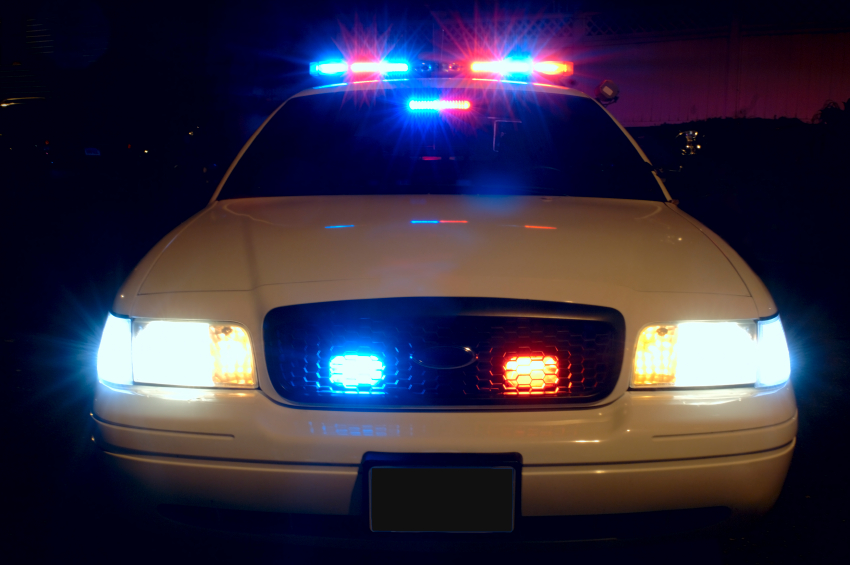
Police Car Lights. Photo courtesy of Scott Davidson, CC by 2.0, via Wikimedia Commons.
