
By Ben Rosen
On Feb. 6, state Senator Blaise Ingoglia (R-District 11) filed a joint resolution that would amend the term limits in the Florida constitution. Currently, members of the state legislature can serve, at most, eight consecutive years each in the state House and state Senate. Currently, a legislator is allowed to return to the state House or state Senate after a gap in tenure.
According to the joint resolution, the amendment ballot would say that state legislators are restricted to 16 years of total service in their lifetime.
“This revised limit would take effect after the November 3, 2026, general election, and provides that those seeking re-election during such election or election or re-election in subsequent elections may complete their terms, regardless of such limits,” the joint resolution stated.
This joint resolution could be passed during the state legislative session that started on March 3. This would then be enacted through a state constitutional amendment that would be voted on during the 2026 midterm general elections if the joint resolution passes and is signed by Gov. Ron DeSantis. There should not be any hurdles to getting this on the 2026 ballot, and adding this amendment to the state constitution is needed.
This amendment is especially needed after a recent controversy on this issue involving state Rep. Debbie Mayfield (R-District 32). President Donald Trump named now former U.S. Rep. Michael Waltz (R-FL) national security advisor. State Sen. Randy Fine (R-District 19) announced he would be running for that seat in the special election. Fine, in accordance with Florida’s resign-to-run law, announced his resignation from the state Senate, effective March 31. This has led to a special election for that state Senate seat, in which Mayfield is a candidate.
Mayfield previously held that seat from 2016 to 2024. As noted in the article from Florida Today, Mayfield was initially ruled ineligible by the Florida Division of Elections. Mayfield then appealed to the Florida Supreme Court, arguing that her return to the state House made her eligible to run. The Florida Supreme Court unanimously ruled that Mayfield is eligible to run in the special election for Fine’s state Senate seat. In their ruling, the court deemed that the clock restarted for Mayfield since there was a gap in service not caused by resignation.
The Florida Supreme Court wrote in their opinion that further clarification to the term limits law would have to come through the constitutional amendment process: “However, until they choose to do so, we cannot read a prohibition into the constitution that does not exist because of policy concerns over gamesmanship.”
Adding this amendment is necessary and would be a welcome change to the Florida constitution. There is no reason for a politician to continuously jump back and forth between the state House and state Senate. As stated by the Florida Supreme Court, it is up to the voters to change this through a constitutional amendment. Ingoglia’s proposal should be given broad support by the state legislature and the voters of Florida if it reaches that point. The Mayfield case highlights loopholes in the existing Florida term limits laws that need to be closed as soon as possible. Lifetime term limits for state legislators are essential to have. There is no reason why someone should spend their entire career working in Tallahassee as a state legislator.
There should be an additional step taken with term limits as well. The amendment proposed by Ingoglia strictly applies to state legislators. An additional joint resolution should be proposed to amend the Florida constitution to make term limits for statewide elected officials’ lifetime. The Florida cabinet offices are Governor, Attorney General, Chief Financial Officer, and Commissioner of Agriculture; all are limited to two consecutive elected terms. These officials should be limited to two elected terms.
–
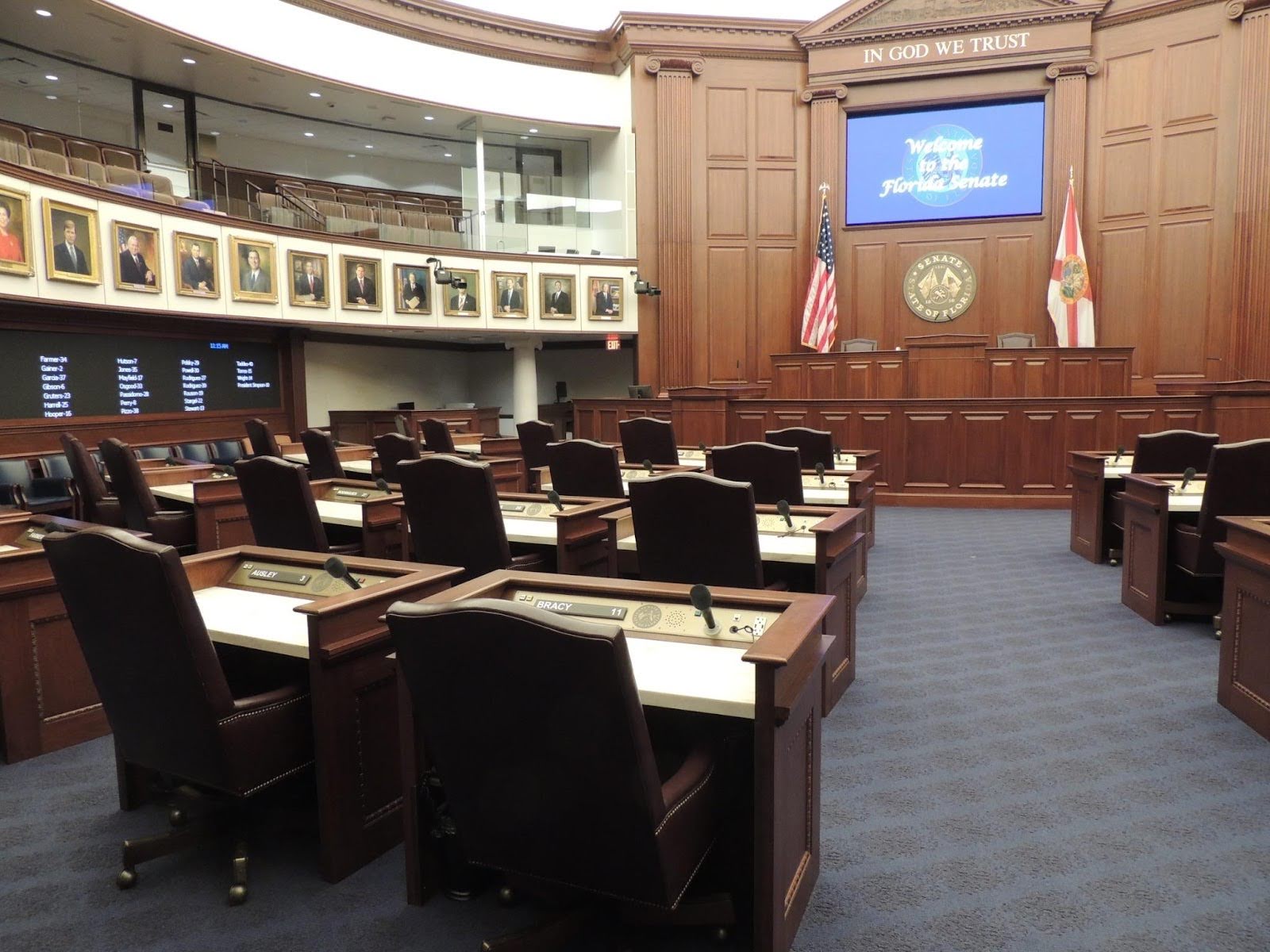
Tallahassee, Florida State Capitol. Photo courtesy of Riis2602, CC BY-SA 4.0, via Wikimedia Commons.
