
By Faith Montalvo
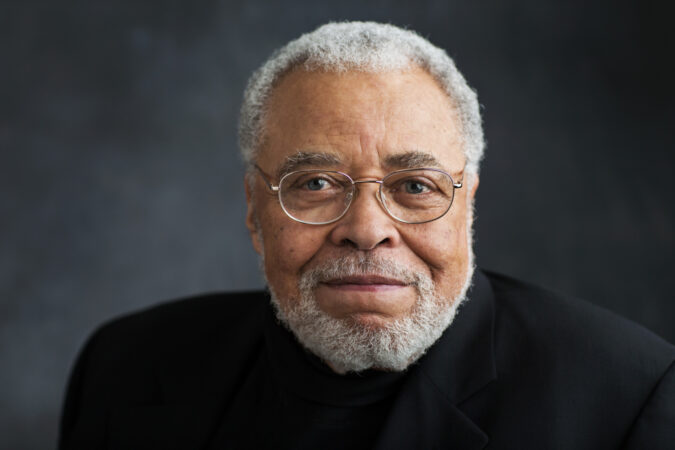
James Earl Jones, the voice behind the powerful Darth Vader from Star Wars and the wise Mufasa in The Lion King, died on Sept. 9, 2024. Jones left behind a multigenerational legacy in film, theater, and television. At The University of Tampa, students and faculty reflect on his life, career and influence.
Hector Sotomayor, a professor of cinema studies, said that Jones was the voice of multiple generations in film and theater.
“You could argue he was the voice for the Boomers, for the Generation X, the Millennials, and for Gen Z,” Sotomayor said. “So, we can’t ignore the elephant in the room that his voice was definitely a special voice.”
“As a kid, you learned to love him, so it’s harder because a piece of your childhood is with it as well,” said Andrew Miller, a junior film and journalism student.
James Earl Jones was born in Mississippi in 1931. His grandparents raised him in Michigan after his parents separated and left him. During his childhood, he developed a severe stutter as a result of the move. According to CBS News, he hardly spoke from the ages of 6 to 14.
“A lot of it is the culture shock and living in a community that didn’t have a lot of representation of his own identity,” said Sotomayor.
When Jones was in high school, a teacher helped him overcome the speech impediment by having him recite poetry, which Sotomayor credits as the way Jones learned to control his voice.
“I think by doing that, the articulation of his voice and poetry in theater helped him to control his vocality and trajectory of his voice and help control the stutter,” he said.
Some of Jones’ early works include the play and the film version of The Great White Hope, which launched his domestic career in 1970. The Great White Hope is inspired by one of the first great African American boxers, Jack Johnson, in the early 1900s, who faced discrimination in his career and personal life.
In the Star Wars franchise, James Earl Jones famously voiced Darth Vader, a villainous character who embodies the conflict between good and evil.
Matthew Cifaretto, a senior cybersecurity major, said he remembered Jones’ voice for this portrayal the most.
“How he could give off a tone of evil, but still caring, especially in the series of seeing his son again and actually starting to turn back,” said Cifaretto. “The fact that he could give off both emotions in one voice” was perfect.
Cifaretto also said that he grew up watching Star Wars, which taught him that there are always two sides to a story. While Darth Vader was evil and filled with hatred, his son Luke Skywalker sensed turmoil inside him. Luke confronted him, which caused the villain to save the galaxy at the end of the original series.
“I think it made a significance that it was an African American actor, and I think that definitely had importance,” said Sotomayor. “Having just this wonderful voice, and an actor in an industry that was kind of underrepresented until blaxploitation films come out in the seventies.”
“He made a lot of people’s childhoods with the movie,” said Cifaretto. “His iconic voice brought a lot to the table, so it was sad seeing him go.”
In The Lion King, Jones played Mufasa, who teaches his son Simba about the circle of life and the balance in the lands that he is to protect as king. In the movie, Jones captured the weight of Mufasa’s responsibility to protect and guide his young son as he grows up.
Miller said, “[Jones] comes as a wiser character who’s lived a lot of life, who’s got great lessons, and he delivers it in a great way. It is the character’s dialogue, but the way he says it, it sticks to you.”
In the movie Field of Dreams, Jones played Terence Mann, a controversial author. The film follows Iowa farmer Ray Kinsella, who hears a voice telling him to build a baseball field: “If you build it, he will come.” After he builds it, the famous “Shoeless” Joe Jackson, a dead professional baseball player, emerges from Ray’s cornfield and brings a whole team to play baseball.
Sotomayor said, “It’s also a film about fathers and sons and about correcting history and the wrongs of history, and how baseball has that duality.”
Toward the end of the film, Terence walks into Ray’s cornfield after the other baseball players disappear back into the cornfield. Sotomayor described this scene as a “magical moment” where Terence laughs as he disappears, capturing what it might feel like to be caught up by a spiritual force.