
By Kiley Petracek
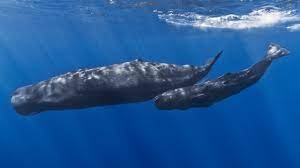
A single sperm whale was found stranded in Venice Beach, Florida, early in the morning of March 10. It was still alive upon discovery, but dispatchers could not move the whale due to heavy winds and surf. Around 3-4 a.m. on March 11, the whale passed away shortly before the plan to euthanize it.
This sperm whale was an older male, stretching 44 feet long, and was considered skinny at 70,000 lbs, or 35 tons, according to the Mote Marine Laboratory and Aquarium (MOTE). Most male sperm whales grow up to 45 tons, according to the Florida Fish and Wildlife Conservation Commission (FWC).
“The fact that it was this close to shore and this skinny tells us something has been going on for a while,” said Gretchen Lovewell, MOTE’s stranding investigations program manager, in an interview with FOX13. Lovewell also noted it had worn teeth, which indicates it’s an older whale.
While male sperm whales often die in solitude upon separation from a bachelor group in later years, they do not often beach since they dive nearly 2,000 ft underwater to hunt, according to Quark Expeditions. Since they are often so deep, there is not much research looking into the lives of sperm whales.
The cause of the whale’s death is unknown. Researchers completed a 13-hour necropsy in an attempt to gather data concerning the species for conservation and species management and find the cause of death.
“During the necropsy performed on the beach, we did not find any glaring or apparent causes of death, and we are still awaiting further analyses from the lab samples we took to potentially find out the cause of death,” said Kaitlyn Fusco with MOTE.
The decomposition of the whale carcass will continue to be monitored by MOTE in a drift analysis that determines how far the carcass naturally drifts and the stage in which whale fall begins as it sinks to the ocean floor. The decay of such large animals contributes to other marine biological communities.
Pollution, oil spills, anthropogenic noise, and lack of food are why this sperm whale wound up stranded in Venice.
Sperm whales are some of the loudest animals on Earth and use their echolocation to hunt in deep, dark depths. “Man’s acoustic footprint in the ocean has become increasingly widespread,” NOAA’s Ocean Noise Strategy Roadmap read. The possible effects of such pollution include masking, leading to missed detection of predators, increased stress levels, and missed feeding or breeding opportunities.
In the 2010 Gulf of Mexico oil spill, dispersants were used to clean the waters, likely affecting the estimated 560 sperm whales in the Gulf. The dispersants had the potential to be cytotoxic to sperm whale skin cells. “The dispersants could have severe impacts on reproduction in females and the health of the whales exposed,” NOAA’s 2010-15 5-Year Review read.
Since this whale was underweight by around 10 tons, assumptions must be made about its food availability. Little research has been done on sperm whale population amounts, but their most common sources of food include sharks, squids, and octopi.
Sperm whale sightings have been on a decline in the Gulf of Mexico, according to NOAA’s Summer 2017-18 Abundance of Marine Mammals report. This mirrors the decline of sharks caught recreationally off Florida’s west coast, from FWC.

While most news coverage of this incident has cited the most recent sperm whale stranding on Florida’s west coast as 2008, there have been at least two others within the past decade or so.
Most recently, in October 2016, a 19-foot sperm whale calf was separated from its mother, wounded by predators, and stranded on the south end of Little Gasparilla Island in Charlotte County. ‘Bubba’ was the name given by the community throughout the rescue effort, but according to the Little Gasparilla Property Owners Association, the calf ultimately was euthanized.

Closest to Tampa Bay, there was a sick adult sperm whale in November of 2013 that was stranded near John’s Pass and also euthanized, according to the Tampa Bay Times.
“Every time you see a whale in distress like we did yesterday, it’s always really hard,” said Laura Engleby, chief of NOAA’s Marine Mammal branch, in an interview with WUSF NPR. “It’s really hard. And so all we can do is utilize the opportunity to learn as much about them as we can,”
As the adult sperm whale decomposes in the Gulf of Mexico, boaters must stay at least 100 yards away for the whale’s and human safety since it is a protected species.