
By Ana Ortiz
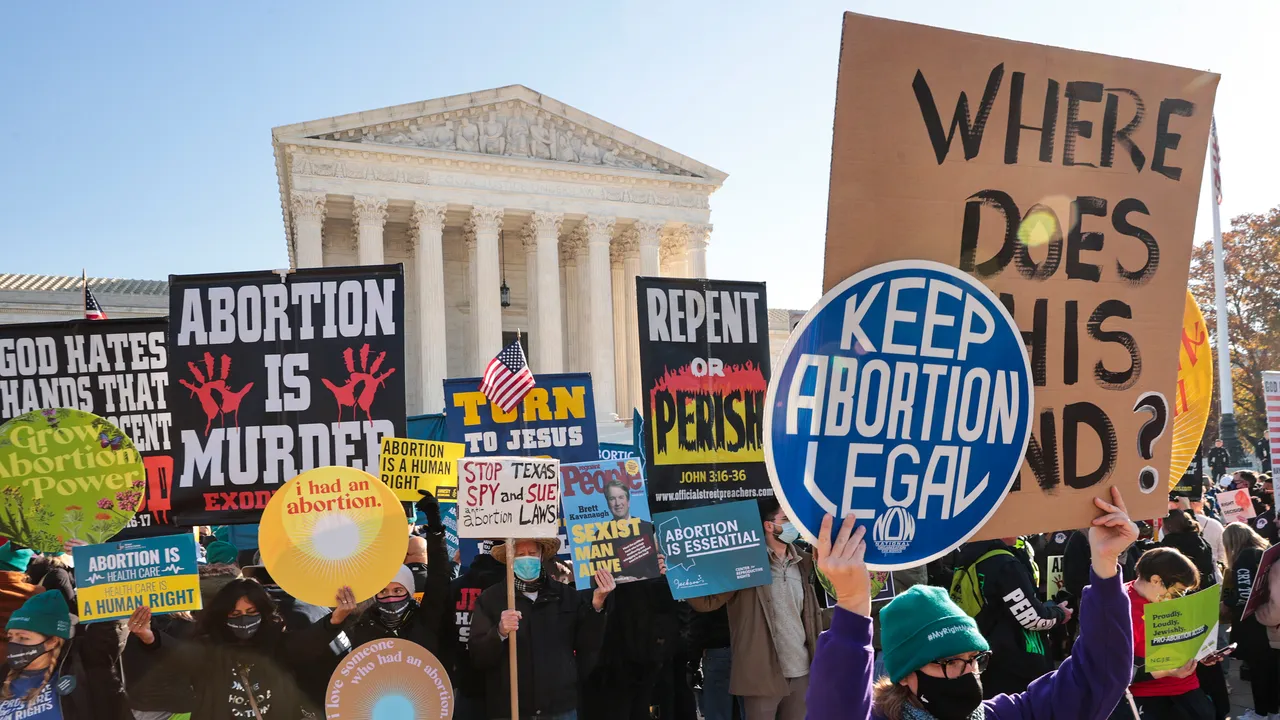
As the nation marks the 51st anniversary of the Supreme Court decision, Roe v. Wade, which legalized abortion across the United States in 1973, recent events have propelled the issue of reproductive rights back into the spotlight. The right has undergone a shift with the recent case of Dobbs v. Jackson, a development that has altered the trajectory of Roe v. Wade and paved the way for a state-by-state approach to abortion legislation.
Roe v. Wade, decided on January 22, 1973, by the U.S. Supreme Court, established a woman’s legal right to choose abortion within certain parameters. The decision recognized a woman’s constitutional right to privacy, which respected her decision to terminate a pregnancy. This ruling established abortion rights that remained stable for nearly five decades.
In December 2022, the U.S. Supreme Court heard the case of Dobbs v. Jackson Women’s Health Organization, a challenge to a Mississippi law that sought to ban abortions after 15 weeks of pregnancy. In a historic decision, the Supreme Court overturned the precedent set by Roe v. Wade, allowing states greater power in regulating and restricting access to abortion.
The Dobbs decision effectively dismantled the national standard established by Roe v. Wade, allowing states to enact more restrictive abortion laws without violating constitutional principles. This change started the debate about the future of reproductive rights in the United States.
With the disintegration of the nationwide protection offered by Roe v. Wade, the battle for reproductive rights has shifted to the state level. States now have the authority to determine the extent to which abortion is accessible within their borders. This has led to various laws, with some states enacting more restrictive measures while others uphold and expand upon the principles of Roe v. Wade.
The decline of a unified national standard for abortion rights poses significant challenges for advocates and women seeking reproductive healthcare. Access to abortion services has become dependent on geographical location, creating disparities in women’s ability to exercise their constitutionally protected rights. In response, activists and organizations are mobilizing efforts to challenge restrictive state laws, aiming to ensure equitable access to reproductive healthcare services across the country.
During this transformative period for reproductive rights, the state of Florida has emerged as a focal point. Advocates and organizations are actively collecting petitions through platforms like https://floridiansprotectingfreedom.com/about/ to shape the state’s stance on abortion legislation. Florida, like many other states, finds itself at a crossroads, where the outcome of these efforts will influence the accessibility of reproductive healthcare.
As the nation reflects on the 51st anniversary of Roe v. Wade, the spotlight is not only on the historical milestone but also on the evolving dynamics of state-level activism and the movements shaping the future of reproductive rights in Florida and beyond.
Dobbs v. Jackson has shifted the right from the federal to the unpredictable state level, emphasizing the importance of advocacy in preserving and expanding women’s access to reproductive healthcare. The journey toward reproductive justice continues, with the anniversary serving as a reminder of the ongoing struggle to protect women’s rights from the past half-century.