
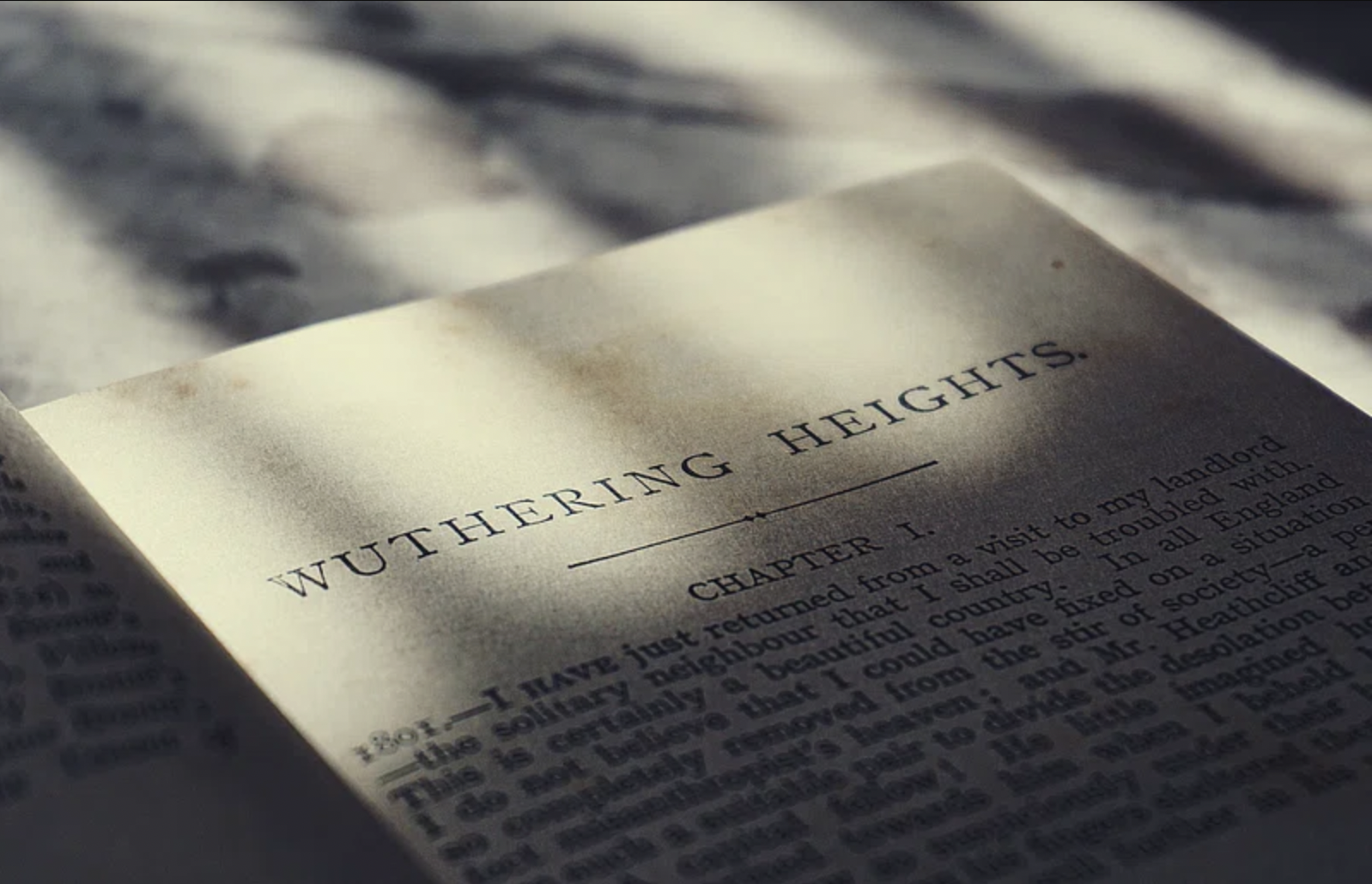
Photo courtesy of Rawpixel, CC.0 1.0, via Public Domain.
Emerald Fennell’s Wuthering Heights sparks mixed emotions among audiences, creating a rift between those who argue that accuracy is more important than capturing a feeling.
–
By Andrew Miller
TAMPA, Fla. — With Friday the 13th and the day before Valentine’s Day, there could not be a better release date for yet another film adaptation of the classic novel, Wuthering Heights, by Emily Brontë. The latest version of Emily Brontë’s Wuthering Heights arrived with dramatic timing.
The film has sparked controversy among audiences, with film buffs and book nerds taking very separate stances.
Former film student Alannah Ahlquist said it was more than an adaptation; it attempted to capture the feelings young readers experienced when first reading the novel.
“I adored it,” Ahlquist said. “Fennell beautifully captured what my 15-year-old self imagined when I read those pages in my English class.”
Wuthering Heights is directed by Emerald Fennell. Her most recent project before that was Saltburn. The 2023 film phenomenon left audiences stunned with its unique cinematography and intense, mind-boggling plot, so whatever Fennell chose to do next guaranteed attention.
For many, the adaptation felt completely out of left field. How could a literary classic work with Emerald Fennell’s strange style, a score by Charli xcx, and co-stars Margot Robbie and Jacob Elordi? This was not the Wuthering Heights audiences were expecting.
Before the film even premiered, former English major Madison Engler shed some light on the initial issues with the film.
Like many others online, Engler discusses a major issue with the 2026 adaptation: Heathcliff is a Middle Eastern man who falls in love with young Catherine, a wealthy white girl. Although Heathcliff ends up being welcomed into the family and makes a life for himself, they ultimately cannot be together due to the time and circumstances they are in.
By casting Jacob Elordi, a white man, as Heathcliff, there was a crucial meaning lost.
“It’s not at all what the book was like, and that really bothered me,” Engler said. “As a fan of the book, this just wasn’t for me.”
Despite these concerns with Fennell’s puzzling casting choice in selecting Elordi, there’s still an undeniable charm in crafting an adaptation that captures how the story felt when you first encountered it at 13.
A “skin room” is referenced several times in Brontë’s novel. In the period when the story is set, the term describes a bed tucked into a closet-like alcove, a cramped, enclosed sleeping space. But at 13, Fennell misread the phrase as something far more literal: a room made of skin.
Leaning into that adolescent misunderstanding, she reimagined the space for the screen by photocopying Margot Robbie’s skin and printing it onto wallpaper, transforming Cathy’s so-called skin room into an unsettlingly literal interpretation.
University of Tampa film student and experimental filmmaker Ollie Walter offers a perspective that pushes back on critics who insist that strict accuracy should take precedence over creative interpretation.
“How many times can the book be adapted to a proper or accurate depiction?” Walter said. “It’s the audience’s own fault, assuming older depictions get stale and aren’t worth revisiting.”
Walter makes a compelling point. Today, it’s common to think of any film in the 20th century as older and outdated. In reality, those older tellings of Wuthering Heights might be what audiences are looking for, while 2026’s adaptation is more so for those who are looking to capture an indescribable feeling. Earlier adaptations may appeal to viewers seeking accuracy, while the 2026 version resonates with those chasing a specific emotional tone.
Ahlquist puts it best: “To any haters, if you weren’t a yearning 15-year-old girl when you first read Wuthering Heights, just say that.”