
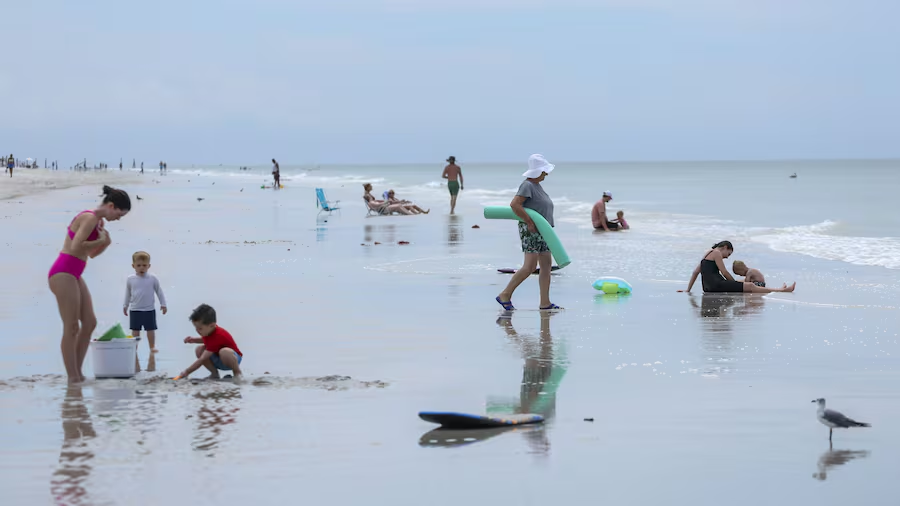
Beach visitors enjoy a low tide at Indian Shores. Canadian travel to Tampa Bay has decreased this year, mirroring a larger trend seen across the United States. [ DOUGLAS R. CLIFFORD | Times ]
This article was first published by the Tampa Bay Times on Dec. 17.
The decrease aligns with the national decline of Canadian visitors wary of visiting due to political and financial concerns.
–
By Hayden Randolph
Canadian travel to Tampa Bay has decreased this year, mirroring a larger trend seen across the United States.
But in Pinellas County, which for decades has benefited from the “snowbird” migration of Canadians to the beaches in the winter, there’s been a significant decline. According to data from Visit St. Pete-Clearwater, spending from Canadian travelers in the region dropped by 17% this year. Overnight stays dipped by 17.6%. The annual growth rate in this segment of tourists decreased by 2.5% from 2019 to 2025, while total spending increased by just 1.5%.
According to Visit St. Pete-Clearwater’s “Visitor Profile and Economic Impact Study,” around 3% of the market originated from Canada for the first quarter of the year. In the study, Canada was the largest market outside of the United States, with Germany at 1% and the United Kingdom at 0.9%.
Florida has a history of being friendly to Canadian travelers. Earlier this year, Republican Sen. Rick Scott of Florida helped introduce the Canadian Snowbirds Act, “a bipartisan bill to allow eligible retired Canadian citizens who spend their summers escaping to Florida to stay for two additional months every year, driving more investments into the state’s economy and tourism industries, and supporting more Florida jobs,” according to Scott’s website. Democratic Sens. Mark Kelly and Ruben Gallego, both of Arizona, were co-sponsors of the bill.
Even so, Canadian return trips from the United States by car declined by 32.6% in August compared to 2024, according to Statistics Canada. Over the same time, air travel declined by 17%.
“Canada is the top source of international visitors to the United States, with 20.4 million visits in 2024, generating $20.5 billion in spending and supporting 140,000 American jobs,” the U.S. Travel Association said in a news release from February. “A 10% reduction in Canadian travel could mean 2.0 million fewer visits, $2.1 billion in lost spending and 14,000 job losses.”
This decrease comes after President Donald Trump made comments about wanting to make Canada the 51st state earlier this year. The US. also imposed a 35% tariff on all goods that don’t comply with the United States-Mexico-Canada Agreement this year. Canada imposed a counter 25% tariff.
The Canadian Snowbird Association, a trade firm for Canadian citizens who own property and travel to the United States, has reported inconsistencies in Border Patrol experiences for travelers this year. But overall, the association is supportive of visitors continuing to travel to states like Florida.