
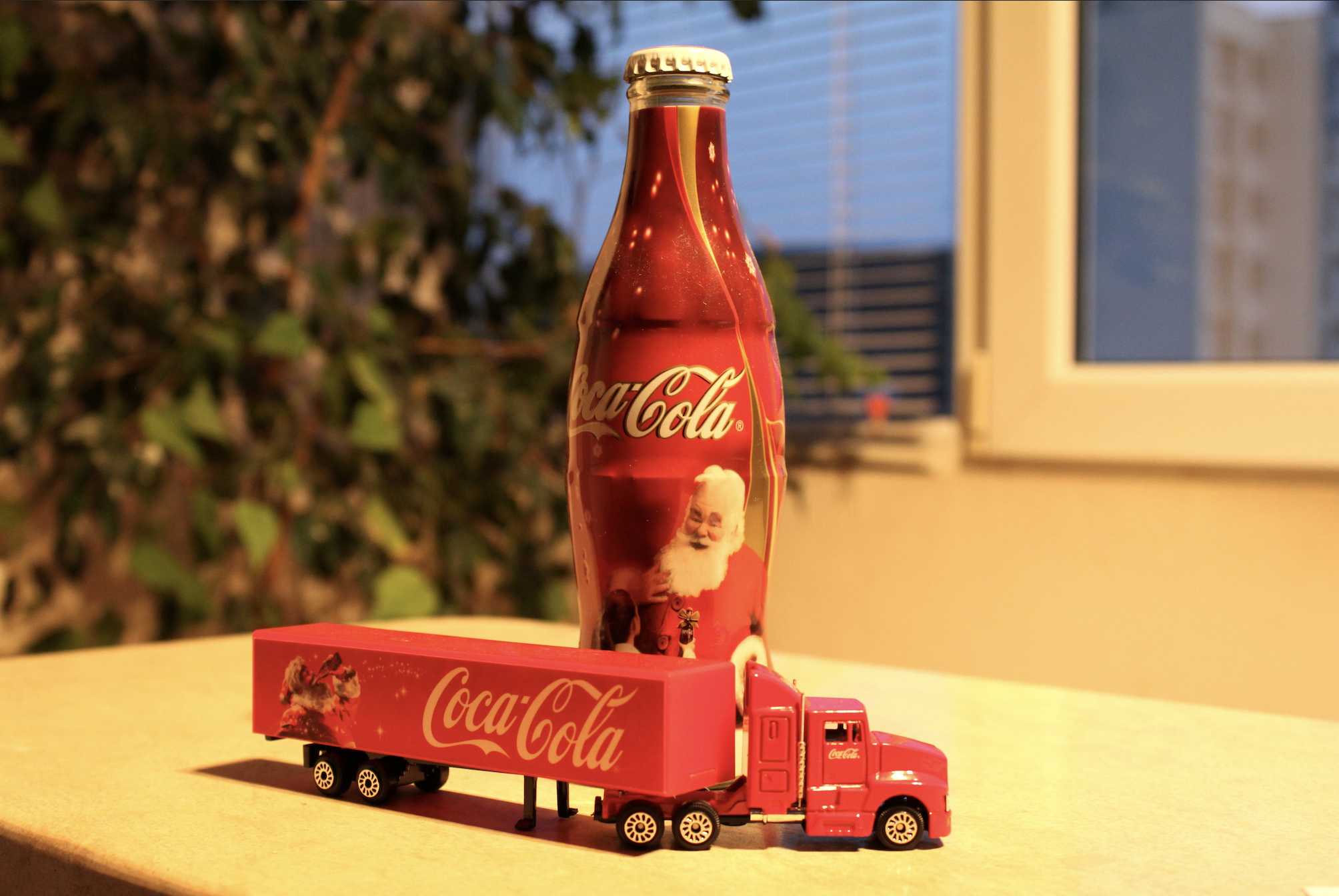
Photo courtesy of Biso, CC BY 3.0, via Wikimedia Commons.

Coca-Cola’s new AI-generated Christmas commercial sparks backlash, with critics citing environmental harm, job loss for artists, and a lack of authentic “holiday magic.”
–
By Andrew Miller
TAMPA, Fla. — The Christmas season is officially here, and with it comes a wave of holiday commercials that stand out from the rest of the year for their warmth and festive spirit.
Coca-Cola’s holiday advertisements have long been considered a hallmark of the season, often featuring Santa Claus or polar bears to tug at viewers’ heartstrings.
Last year, the company disappointed many by using AI to create its leading Christmas commercial, and just days ago, it released a second AI-generated ad. This latest installment floods screens with inauthentic holiday imagery and empty festive promises, leaving audiences feeling anything but merry.
Jayne Wilkinson, a senior environmental studies major at The University of Tampa, explained that AI has a large carbon footprint. In an ad like Coca-Cola’s, where the company once again showcases its signature polar bears, this choice feels especially ironic, since that same AI footprint contributes to the environmental harm threatening the species.
“It just seems counterproductive for them to be using AI, which is environmentally adverse,” said Wilkinson. “It is one step forward, five steps back.”
Aside from the environmental impact, it’s also important to remember that because this ad was created using AI, the artists and crew who would have brought the vision to life were never hired or paid for any work. An entire creative industry is now at risk because major companies, such as Coca-Cola, are choosing to turn to AI.
Livsey Kegler, a senior at UTampa, added that a billion-dollar company like Coca-Cola has the means and responsibility to support artists for major commercials like this one.
“I find Coca-Cola’s use of AI to be extremely disappointing and lazy,” said Kegler. “Coca-Cola is a massive company, and they 100% have the budget to hire top talent who deserve the chance to create real magic.”
Real magic that comes from authenticity, not phony animations that lack true “Christmas spirit.” Even on a technical level, the ad falls short. Upon closer examination of the iconic Coca-Cola Christmas truck, the number of its wheels and framework changes inconsistently from shot to shot.
Angela Meyer Sterzik, a writing and English professor at UTampa, commented on the use of AI on such a large scale.
“I think it’s a tool that provides both opportunities and harm,” said Sterzik. “When CGI became an option, sculptors in the film/entertainment industry were negatively influenced, but there were also opportunities for those who learned and used CGI to enhance their work.”
With this mindset, we might view the ad’s use of AI differently. Coca-Cola has stated they’re simply adapting to new technology and trying to stay ahead of the curve. If film and television continue to move in this direction, either for budgetary reasons or to meet production demands, it may make sense to utilize AI.
Overall, audiences have had mixed reactions to the commercial. Like Kegler, many agree that although Coca-Cola is showing us its familiar animations, when viewers can spot the AI and sense the lack of authenticity, the Christmas magic is instantly lost.