
By Olivia Gehm
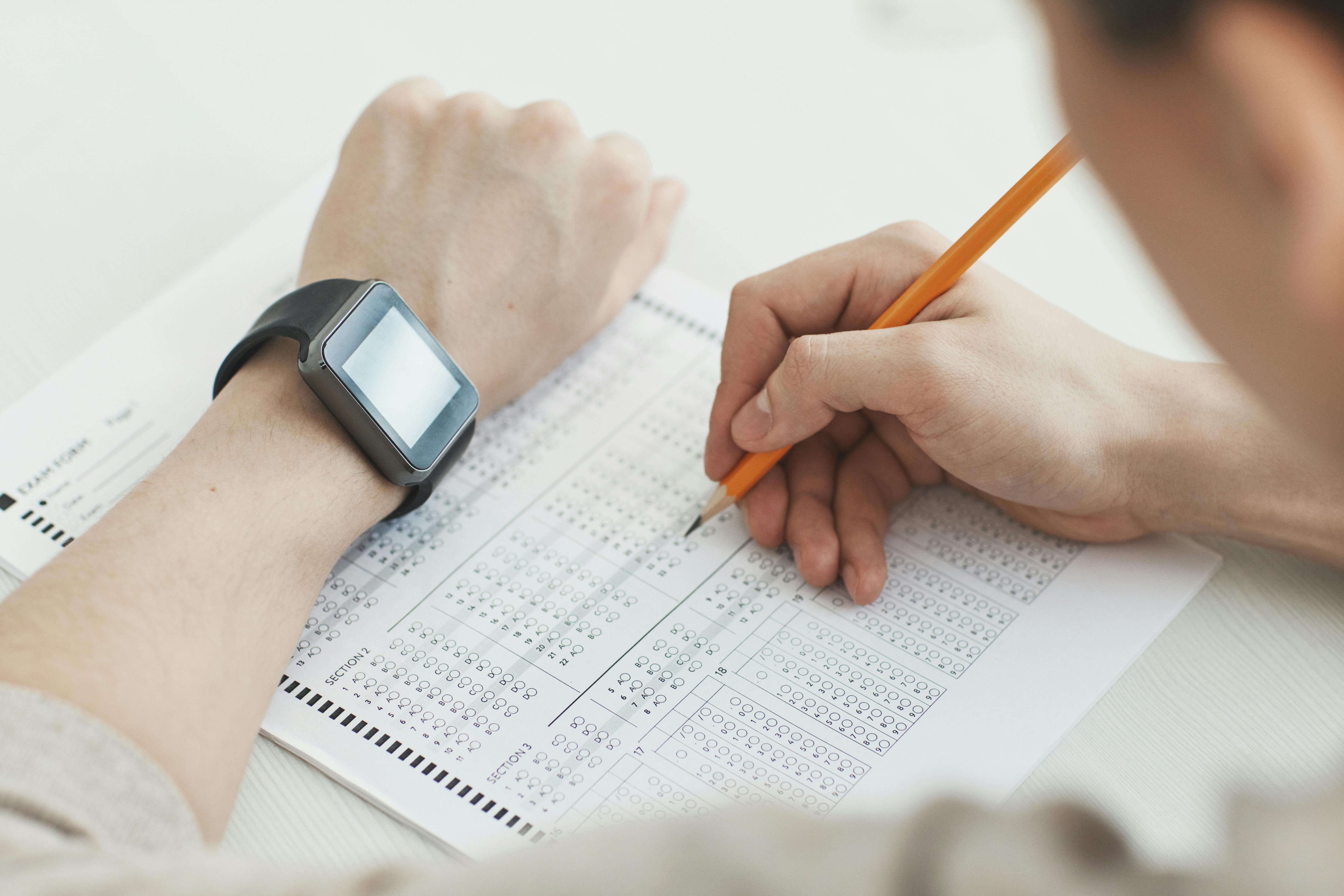
TAMPA, Fla. — Throughout the United States, high school students are preparing for the SAT and ACT in anticipation of college applications. Some are high school sophomores and juniors, taking the tests for the first time, while others are seniors, aiming to improve their scores in hopes of securing a spot at their dream school or more scholarship money. These tests cover much of the reading, writing, and math instruction that students typically learn in high school, with the ACT also including a science section.
When the COVID-19 pandemic threw a wrench in many students’ plans to perfect their scores and made testing impossible, nearly 1,700 public and private four-year universities abandoned their testing requirements, according to FairTest. While the requirement was at first a temporary initiative for Fall 2023, most universities made the change permanent. In fact, the number of test-optional scores later rose even more, to around 1,775.
However, some schools have recently reinstated testing requirements, especially prestigious universities hoping to maintain their selectivity and reduce strain on admissions offices. Many of these schools saw a sharp increase in applications following test-optional policies.
Among this group are many Ivy League universities, like Dartmouth, Brown, Harvard, and Cornell, which all require students to submit SAT or ACT scores to be considered for undergraduate admission. The Northeast, however, is not the only place where testing has been reinstated. South Florida’s own UMiami has similarly reinstated test requirements for Fall 2026.
So the question remains, are standardized tests necessary for college admissions? Are they fair to students? While there are several valid concerns as to why standardized tests may not be completely equitable, they are necessary for one main reason: grade inflation.
Gone are the days when a high school transcript was the perfect indicator of a student’s success and knowledge level. The average high school G.P.A has increased by nearly half a point over the past 30 years, starting at 2.68 in 1990 and eventually rising to 3.11 by 2019. Furthermore, the national average public high school graduation rate had climbed to 87% by 2022, despite lingering just above 80% the decade prior.
Such increases in student performance would suggest an increase in the quality of education or access to it, but national test scores say otherwise. According to The Nation’s Report Card, 2024 test scores of high school seniors in both math and reading reached the lowest levels ever recorded. In other words, grades are up, but proficiency is not.
So why the discrepancy? Just as the U.S. Dollar has slowly become worth less and less, so has an “A.” Widespread grade inflation would be no problem if the G.P.A scale had no limit; universities would simply raise their standards the same way a grocery store raises its prices.
However, the mathematical ceiling of an unweighted 4.0 makes it difficult to differentiate between high-performing students and average ones. There are plenty of reasons for this continued inflation, and many of them fall under the umbrella of school policy.
As the New York Times reported in 2023, “The policies many school districts are adopting… make it nearly impossible for low-performing students to fail — they have a grading floor under them, they know it, and that allows them to game the system.”
The policies that lead to grade inflation require their own conversation, but when it comes to the world of college admissions and standardized testing, the takeaway is that they rob a report card of its objectivity.
Take, for instance, a student who graduates with a respectable 3.8 G.P.A. from a public high school with relaxed grading policies. A student cannot receive below a 50% on any assignment, all late work must be accepted, attendance is irrelevant, etc. Now, take a student who graduates with a 3.5 from a chartered high school with much stricter policies: students’ attendance is factored into their grade, late work is not accepted, and students are generally held to higher standards of learning.
It is neither of these students’ fault that their high schools operate the way that they do, but while course rigor can be communicated through a transcript or weighted G.P.A., college admissions officers have no way of knowing how the administrative policies of each high school affect its students’ grades. The 3.5 student may be better equipped for higher education, or maybe not. Unfortunately, standardized testing is the only way to reinject objectivity into applications.
In the wake of the conversation surrounding the fairness and accessibility in standardized testing, as well as the advent of new technology, the College Board announced in 2022 that the SAT would be administered digitally, instead of on paper.
Many longtime critics of standardized tests have claimed that the tests were less accessible to students from disadvantaged racial and socio-economic backgrounds, as well as students with learning disabilities. This shift to digital test-taking alleviates some of that inaccessibility by shortening the SAT and making it possible to administer more frequently. The ACT has also recently followed suit, offering a digital option to students.
Despite these changes, some still feel that the intense, expensive test prep that many students undergo makes the exam inherently inequitable. While this is a fair assessment (no pun intended), the move away from standardized tests is inequitable as well. These tests allow students to showcase their abilities without the expensive, time-consuming extracurriculars that other students use to bolster their applications.
A high-performing, low-income student may not be able to prove themselves by travelling and competing with the debate or math team. Not only is a 1550 on the SAT far cheaper, but much more objective.
While these tests are certainly flawed, they help students show their strengths without a large financial strain, and they combat grade inflation. Until public education can find a way to universally hold students to the same standards and reverse artificially high grades, these tests are here to stay. Which is a good thing.
––
Photo courtesy of Andy Barbour via Pexels.