
By Liv Dennis
As finals quickly approach, the first and most important step is to get your game plan together. Before you even crack open a textbook or open your laptop, take a moment to sit down and build a realistic, organized schedule. This will be your roadmap to finals week. Without a plan, it’s easy to get overwhelmed or waste away your time trying to figure out what you need to do next.
Finals can be a stressful time, no matter if this is your first time taking them or this is your fourth go-around.
Julia Guatto, a freshman at The University of Tampa, is one of the many taking college finals for the first time and experiencing a range of emotions.
“I’m feeling a bit stressed and nervous about my first college finals,” Guatto said. “But I’m trying to stay focused and take it one step at a time.”
Others, like senior Milena Guzmán, have a bit more experience under their belt. Nonetheless, finals are not always a walk in the park.
“I feel more confident now,” Guzmán said. “I still get anxious, but I’ve found what works for me, and that helps.”
However you are feeling toward finals, whether you’re a freshman, a senior, or somewhere in between, there are several ways to navigate the week.
Start by figuring out how many days you have until your exams and which subjects may need the most attention. After that, break your days down into manageable chunks. These chunks can consist of things such as study blocks, meal breaks, and downtime.
To organize your schedule, use a calendar or planner to visually lay out your time. Focus on your most difficult subjects during the times you’re most alert, and make sure to rotate the topics so that your brain stays fresh. If you have any big projects or papers due, break them into smaller tasks with deadlines to avoid the last-minute crunch.
“I still prepare weeks in advance,” Guzmán said. “I’ll never be the type of person who crams. I can’t do that at all.”
Guatto said she uses both a planner and a digital sticky note on her desktop to track her exams and assignments.
“This helps me stay on top of deadlines and plan the best times to sit down and study,” she said. “I can get a head start and avoid cramming everything at the last minute.”
These deadlines are going to help you work smarter, not harder. Cramming might seem doable for some, but research shows it’s far less effective than spacing things out and using active recall, like flashcards or practice questions throughout the week.
Once you’re ready to begin your studies, practice different study techniques to increase your recall. A good technique for this is the Pomodoro Technique. This technique involves 25 minutes of focused study and then a 5-minute break. After four cycles of this, take a longer 20-minute break. It keeps your brain fresh and reduces burnout.
“I write out notes for each chapter and go over all the homework and past tests on Canvas,” Guatto said. “For formulas, I make a summary sheet with key equations and small definitions to remind myself when and how to use them.”
Guzmán said that her best method for studying is by using the active recall method on a whiteboard.
“Basically you write out what you just read and then you erase it, try to do it again and try to remember what you read.” Guzmán said. “Then you go over it with another color so you can fix or add the gaps that you were missing. That really helped me a lot.”
If you’re not the best at studying on your own, or maybe you need to talk through the topics, consider getting a few classmates or friends together to form a study group, or head to the campus tutoring center if you’re finding yourself stuck.
From April 30 to May 5, UTampa tutoring sessions will be held in the Sword and Shield room in the Martinez Athletics Center. Sessions will be drop-in, group-tutoring sessions, with services provided from 9 a.m. to 9 p.m. To utilize these sessions, use Navigate to schedule an appointment or to view the drop-in schedule.
But while you are studying and planning your days, it’s important to also squeeze in some time to take care of yourself.
It’s tempting to skip a few meals and pull all-nighters to get your work done, but your brain needs fuel and sleep to function properly. You should aim for at least 7 hours of rest and keep snacks on hand that support focus.
The way you make time for yourself and give your brain a break is dependent on who you are as a person and student. It doesn’t matter, as long as you are prioritizing yourself, your brain, and healthy habits.
For Guatto, she prefers to take a break and exercise when she gets overwhelmed with stress.
“I usually go to the gym or for a long walk, which gives me a chance to clear my mind and reset,” Guatto said.
While Guatto finds peace in the outdoors, Guzmán prefers meditation.
“If I skip three days, I can already feel that I’m not as present and more anxious,” Guzmán said.
And when the burnout hits, especially during spring finals, Guzmán turns to making sure she has a positive mindset.
“I remind myself, ‘Hey, it’s going to feel worth it, do your best, you’re a good student.’ Just positive talk, basically, that’s my mechanism,” said Guzmán.
This part is easier said than done, but don’t let the stress get to you. It’s totally normal to feel overwhelmed, but when that anxiety begins to creep in, focus on grounding yourself with a few techniques such as box breathing, writing down your thoughts and emotions, or try listening to calming music or white noise.
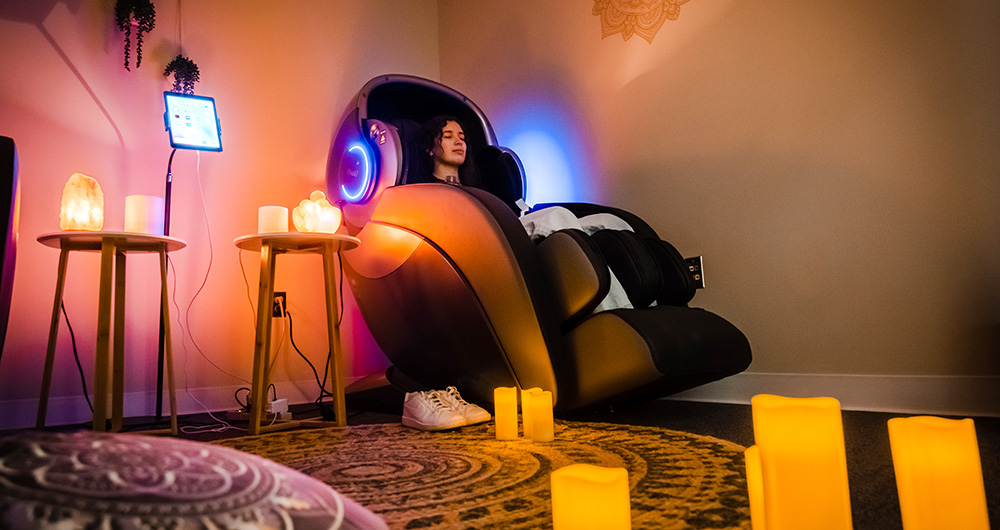
And don’t be afraid to use your resources for this as well. UTampa offers counseling, peer mentoring, and wellness workshops — all of which are free for students.
“Once during finals they had a stress kit in the Wellness Center. That helped a lot. They gave me a diffuser, stress relief methods and stuff like that,” Guzmán said.
Students who wish to use counseling services on campus can call the Health Center at (813) 253-6250 to set up an initial appointment. For support groups, you can email counseling@ut.edu, and walk-in appointments are available during clinic hours: Monday to Friday at 8:30 a.m. to 5 p.m.
Once you’ve taken care of your mind and your studies, and you have finally made it to the day before or the day of your final, here are a few tips to make sure you have a successful day of finals.
Don’t wait until the morning of your exam to find your calculator or print your paper; instead, have it laid out for yourself and pack your bag the night before, set out your clothes, and go to bed on time. On the day of the test, eat something with protein or whole grains to stay alert, bring water, an extra pencil just in case, and finally, take a breath before diving in and acing your test.
“Don’t cram, do your best and if you have questions, go to office hours,” Guzmán said. “I highly recommend office hours to fill any gaps that you might have.”
Guatto adds to this advice, and while she acknowledges that finals week is not an easy time, there are certainly ways to make it a bit easier.
“Do not be afraid to ask professors, tutors, or classmates for help, because there is always someone willing to help and make the content easier to understand, especially professors,” Guatto said. “Getting enough sleep, knowing when to take breaks, and staying positive will make a big difference compared to having a negative attitude thinking you will fail and giving up on studying.”
Finals certainly aren’t fun, but they don’t have to be an overly stressful situation for you. Start early, prioritize your body and brain, and take advantage of UTampa’s many resources. Good luck!
As Guzmán puts it best: “A grade doesn’t determine who you are.”
–-
Photo courtesy of The University of Tampa website.