
By Gloria Falach
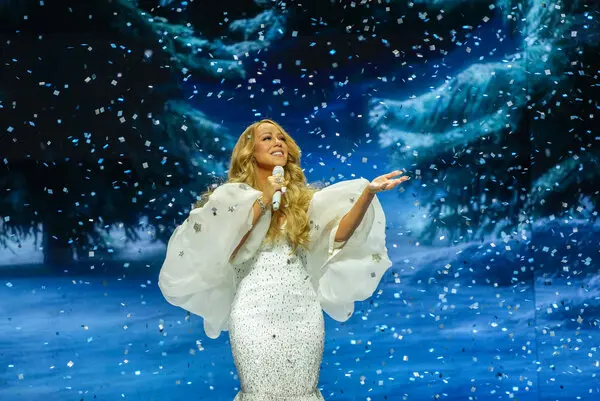
“All I Want for Christmas is You” by Mariah Carey is a classic song that fills the hearts of many during the Christmas season.
In Nov. 2023, Andy Stone and Troy Powers filed a lawsuit for $20 million against Carey and Walter Afanasieff for the copyright of Carey’s beloved Christmas song.
According to USA Today, Stone and Powers’s song, “All I Want for Christmas Is You,” was released in 1989, while Carey’s was released during the 1994 holiday season. The suit alleged that Carey’s song copied multiple musical elements, including a comparison between a loved one and the trappings of seasonal luxury.
On March 19, U.S. District Judge Monica Almadani ruled that not enough similarity could be proven between the two songs based on an extrinsic test that assesses the similarities of the two works.
According to The New York Times, Carey and Afanasieff’s lawyers argued that the two songs were different.
Carey and Afanasieff’s lawyers said the lawsuit was based on common Christmastime references like snow, mistletoe, presents, and wanting a loved one for Christmas.
The lawyers quoted in The New York Times said, “‘the human condition, and the need for the company of another above all else at Christmastime,’ were not themes that were protectable by copyright.”
Experts found that only five words were shared between the two songs: mistletoe, Santa Claus/Santa, snow, stocking, and Christmas.
Almadani granted that no trial was needed, agreeing with Carey’s lawyer’s claim that her song, written in 1994, used common tropes in many Christmas songs that existed before 1989.
Mariah Carey has not been the only popular music artist who has faced copyright criticism throughout the years and has had to fight for the rights to their music.
In 2022, Taylor Swift had a copyright lawsuit on her song “Shake It Off,” which went on for five years before making an agreement and dismissing the case.
Stone and Power’s attorney, Gerald Fox, also represented clients who sued Swift for the copyright.
“It appears that the district courts routinely dismiss most plaintiffs’ copyright cases,” said Fox to USA Today.
According to Variety, Nathan Butler and Sean Hall alleged that Swift’s song infringed upon “Playas Gon’ Play,” an unknown single from the group 3LW in 2001.
Swift wrote in a filing that she did not hear the song or know about the group until after the lawsuit. She would not have been able to hear the song in 2001 because her parents “did not permit [her] to watch (MTV’s hit countdown show) TRL until [she] was about 13 years old.”
Swift argued that similar phrasing in both songs was a result of the terminology being popular as a part of everyday language before Hall and Butler wrote their song.
Common phrasing that often inspires lyrics has caused multiple copyright cases among artists.
Joe Satriani, a Grammy-nominated artist, believed that Coldplay’s “Viva La Vida” sounded too similar to his song “If I Could Fly.”
According to BuzzFeed, in 2009, the two parties agreed on an undisclosed settlement.
Yusuf Islam also wanted to sue Coldplay for thinking “Viva La Vida” sounded similar to his song “Foreigner Suite.” He waited to see how Satriani’s case ended before filing.
Islam did not end up suing because he knew how “arbitrary some of these battles can be,” as stated by BuzzFeed.
Islam’s point about these cases being very random and based on personal whim can be seen in many cases. They are created by the belief that a popular song was stolen by someone, causing them to want to take credit.
Many of our favorite artists are constantly fighting for the rights to their songs over melodies and lyrics inspired by their personal experiences and everyday surroundings.
Carey, Swift, and Coldplay are three popular artists who have faced these legal problems. Which song will be the next target of a copyright lawsuit involving some of our favorite artists?
–
Photo courtesy of The New York Times.