
By Ben Rosen
Congressional Republicans are working to extend the Tax Cuts and Jobs Act (TCJA), better known as the Trump tax cuts, that expire at the end of 2025. The law was originally enacted in 2017 during President Donald Trump’s first term in office, cutting income tax rates across the board.
In addition, the TCJA effectively eliminated any penalty for not following the Affordable Care Act (ACA) individual mandate provision. The law also created opportunity zones to incentivize investment in lower income areas.
To pass an extension of the TCJA Congressional, Republicans will use a procedure known as budget reconciliation. This process allows for the legislation to bypass the filibuster in the Senate. However, the Byrd Rule limits what can be in a reconciliation bill.
With Rep. Elise Stefanik (R-NY) set to become the U.S. Ambassador to the United Nations (UN), House Republicans will have no margin for error for the time being. This is one challenge that House Speaker Rep. Mike Johnson (R-LA) and GOP leadership will have to navigate.
Both the House and Senate will need to pass an identical budget resolution before taking any further legislative action on the measure. This resolution provides specific instructions to the budget committees in the House and Senate for crafting the bill.
Sen. Lindsey Graham (R-SC) and Rep. Jodey Arrington (R-TX) chair the budget committee in the Senate and House respectively. Graham and Arrington will help start the process of passing the actual legislation to extend the 2017 tax cuts.
Given the provisions of the Byrd Rule, this tax cut extension will need to sunset because it will be passed using budget reconciliation. This is also why the TCJA expires at the end of this year; it was passed using budget reconciliation as well.
In this bill, Republicans have an opportunity to get serious about the federal budget and reducing the deficit. The budget deficit for fiscal year 2024 was $1.832 trillion, according to the Congressional Budget Office (CBO).
If the CEO of a company lets their company run the annual budget deficits as the U.S. federal government does, they would be fired. It is ridiculous quite frankly that the federal government has not had a balanced budget since fiscal year 2001.
Congressional Republicans need to take this opportunity to be fiscally responsible and work toward a balanced budget. Significant spending cuts are necessary. This process is the way to go about those spending cuts because the bill cannot be filibustered in the Senate.
However, there is a part of the Byrd Rule that harms any potential spending cut effort. The Byrd Rule prevents changes to Social Security from being included in a reconciliation bill unless at least 60 Senators vote to override the ruling of the Senate parliamentarian.
Changes need to be made to Social Security before the program becomes insolvent. If that happens, automatic benefits cuts go into effect. According to their annual report from 2023, the Social Security Administration projects each trust fund will see at least a 20% benefits cut.
It will be a challenge to pass this bill for Speaker Johnson and Senate Majority Leader Sen. John Thune (R-SD) given the narrow House majority and Senate rules. However, it can be done if there is widespread agreement on the main provisions of the legislation.
Congressional Republicans should not get fancy with the State and Local Tax (SALT) deduction cap. Across the board tax loopholes should be closed to help increase revenue while not changing the actual tax rates.
The major challenge toward achieving a balanced budget with this bill is the existing spending problem. Based on the CBO data for fiscal year 2024, even if all discretionary spending was cut, the U.S. would still have a budget deficit, assuming no changes to revenue.
With Congressional Democrats seemingly unwilling to work with Republicans to progress toward a balanced budget, the reconciliation process is the only way to make significant spending cuts legislatively.
President Trump, Leader Thune, and Speaker Johnson need to work together and be on the same page for the process to go smoothly. All three also need to recognize this as a chance to make significant budgetary reforms beyond Byrd Rule requirements.
–
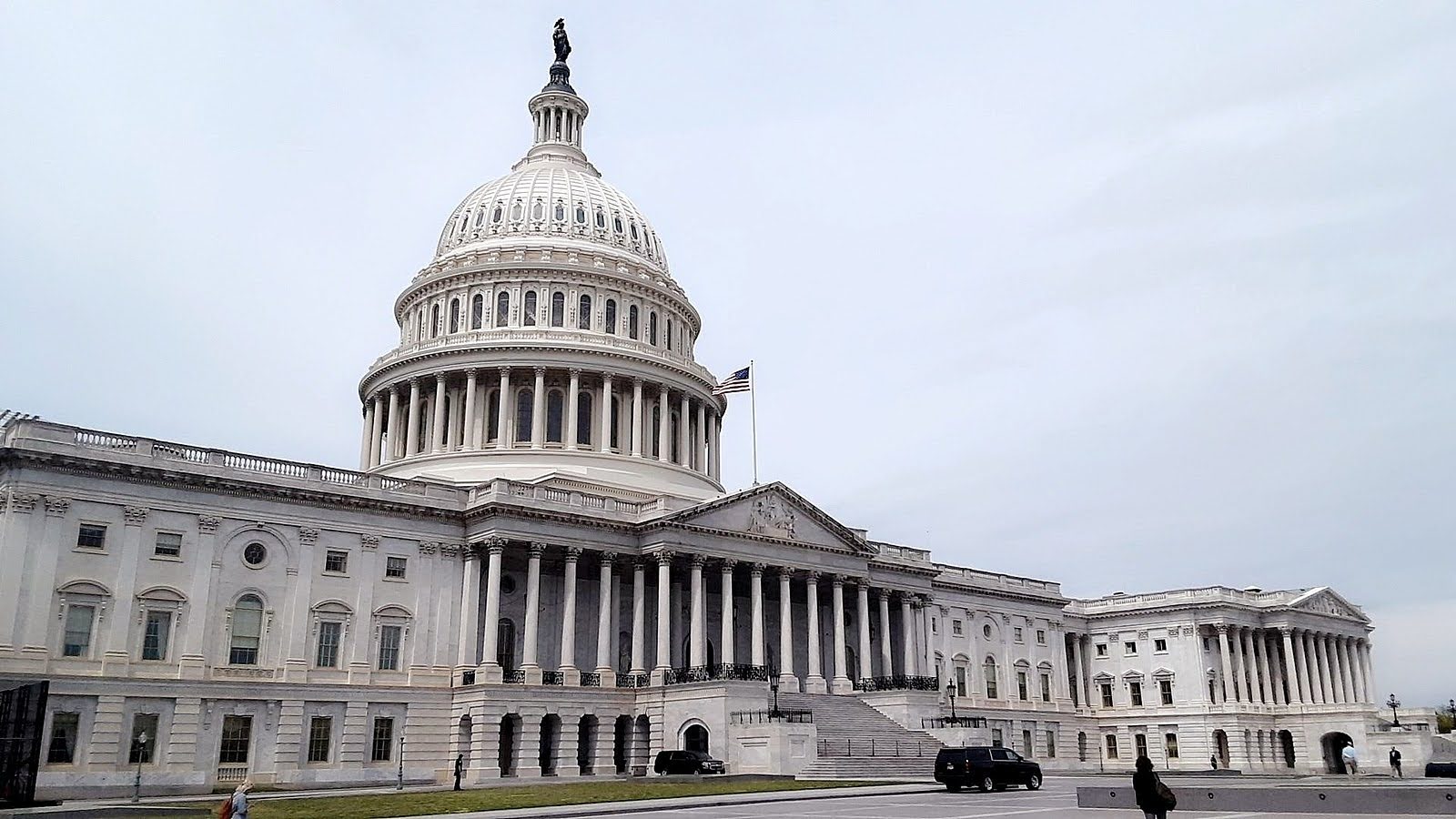
The U.S. Capitol building. Photo courtesy of JessicaRodriguezRivas, CC BY-SA 4.0, via Wikimedia Commons.
