
By Jilian Geer
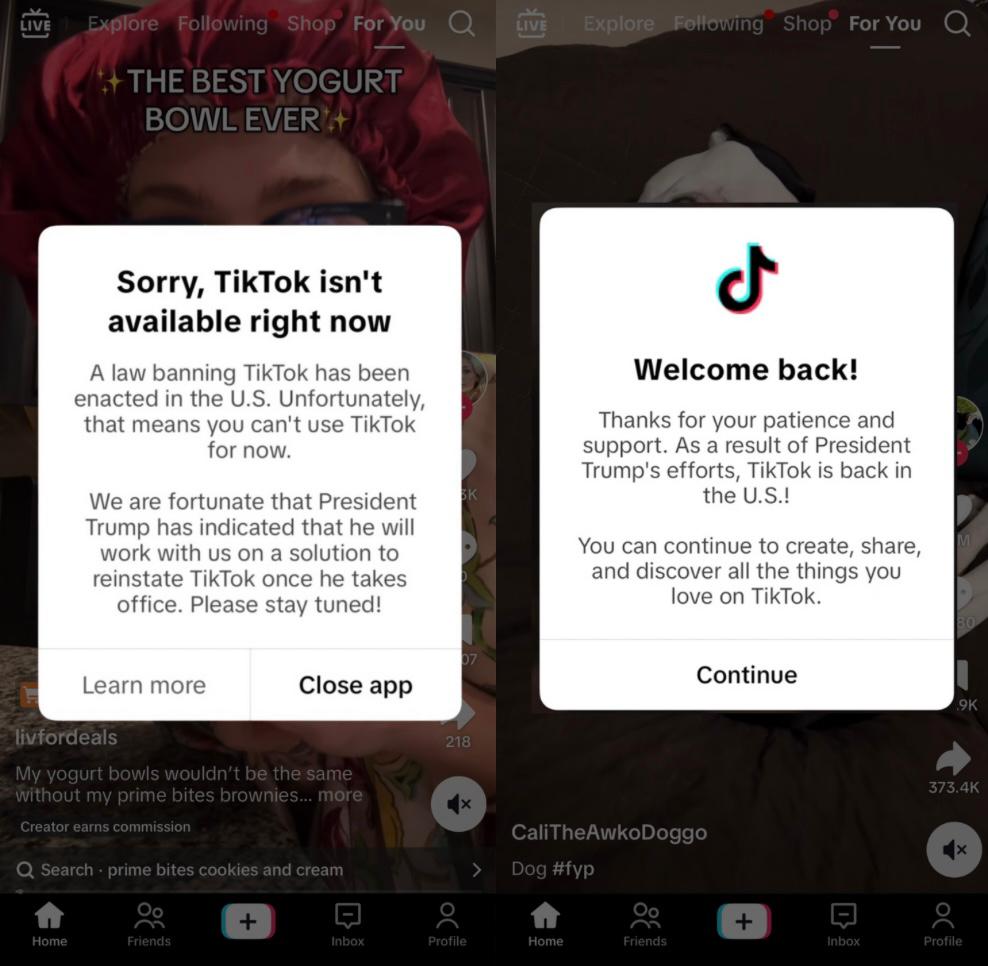
TikTok, a popular video-sharing app with over 170 million monthly U.S. users, was banned nationwide on the evening of Jan. 18, 2025. In just seven years, the platform has revolutionized how people connect, create, and consume content daily. This decision, which followed long-standing national security concerns over data privacy due to ByteDance’s Chinese ownership, shocked and distressed users.
Although there were rumors and speculations leading up to the ban that it would be pushed back or not happen, the execution was quick. TikTok became inaccessible to American residents, and the platform was removed from major app stores.
“My brain would automatically just click on the app even though it was down,” said University of Tampa senior Ally Athanas. “I think it would be better for me personally if it was gone, but I am glad it’s back for now.”
Creators and influencers on the app who have built personal brands and businesses only had a short time to say their goodbyes and inform viewers to follow them on other platforms. Many trends formed in this time such as creators posting all of their old drafts, posting their other socials, and sharing secrets about their page. The thought of TikTok’s absence leaving a void in many users’ daily routines led many to switch other platforms, including Lemon8, Instagram Reels, and most controversially, Xiaohongshu, more commonly referred to as RedNote, a fully owned Chinese app.
In a surprising turn of events, not even 24 hours after the ban, Donald Trump signed an executive order extending the ban for 75 days to negotiate a potential sale with the owners. Upon opening the app, users were greeted with a message thanking President Trump for his efforts, prompting its return. Users who deleted the app remain upset because it has not returned to app stores.
Although the app may have received an extension, the ban cannot be fully reversed under its current ownership.
“Trump does not have the power to stop or lift the ban unless TikTok divests its Chinese ownership,” said William M. Myers, associate professor of political science and international studies at UTampa. “Google and Apple have not allowed the app to be downloaded or updated because they would be in breach of the law.”
TikTok and President Trump argued that the ban unconstitutionally restricted American users’ freedom of speech.
“The law itself was really about restricting the speech of the company and/or the Chinese government in promoting or suppressing certain kinds of posts [as they are] based in another country and do not have the same expectation of freedom of expression,” said Jonathan Lewallen, an associate professor of political science and international studies at UTampa.
While the ban was brief, many users have reported noticeable changes in the app’s algorithm. Previously, TikTok’s “For You” page was known for its personalized user experience, which presented tailored content to each individual based on their preferences. Post-ban, users feel that the algorithm no longer matches their preferences, and certain content seems to be censored. This leads to speculation that the app has had potential algorithm changes or is under new ownership.
“I’ve noticed a lot less ads, and the content I’m seeing is not like what I was seeing before but maybe the algorithm was reset with the ban and it just has to relearn my habits,” said UTampa sophomore Jalissa Bruce.
While TikTok’s return brought relief, the app’s future remains contingent on negotiations and changes in ownership within 75 days. The circumstances surrounding this case serve as a reminder of the uncertainties that come with the digital age. The platform’s future remains unclear, but in the meantime, the TikTok community will continue to create, share, and connect with others, hoping that a permanent solution for the digital hub is near.